Showing posts with label Cognitive Development. Show all posts

Friday, November 19, 2010

Theory of Mind and Perspective Taking

There's a wealth of new and very interesting articles in the November Issue of Developmental Psychology relating to theory of mind and perspective taking:
  • in their article "True or false: Do 5-year-olds understand belief?" William V. Fabricius and his colleagues argue that conventional theory of mind tests don't really show a capacity for false belief understanding but instead
    "young children may only appreciate that people will know certain things and remain ignorant of certain other things as a function of perceptual accessibility. The argument goes on to suggest that in instances in which an individual does not know something, young children make a logical leap and judge that this individual is bound to be mistaken and that he or she will choose an incorrect option when given a choice between correct and incorrect alternatives."
    This has been called perceptual access reasoning in which children follow two principles:
    "(a) seeing and other forms of perceptual access lead to knowing, and lacking perceptual access leads to not knowing and (b) knowing leads to acting correctly, and not knowing leads to acting incorrectly."
    In a standard false belief task the child can only choose between two options (e.g. the toy is either in the red or the blue box). This makes their responses ambiguous because it is not clear whether children pass this task because they understand that the other person will act on a false belief/mental representation or simpy because they reason that the person will make the wrong choice as he or she didn't have perceptual access to the situation.
    The experiments reported in this article indicate that children only really start reasoning about beliefs at age six. Favicus et al conclude that:
    "because most prior studies have failed to detect young children's use of perceptual access reasoning, they have overestimated their understanding of false beliefs."
  • In an article called "Forgetting common ground: Six- to seven-year-olds have an overinterpretive theory of mind." Kristin Hansen Lagattuta report a study in which
    Four- to 9-year-olds and adults (N = 256) viewed a series of pictures that were covered with occluders to reveal nondescript or identifiable parts. Participants predicted how 3 characters, 1 who had previously viewed the full picture and 2 who had not, would interpret the obstructed drawings. Results showed significant development between 4 and 9 years and between 9 years and adulthood in understanding thought diversity as well as situations in which people should think alike. There was also evidence for aU-shaped developmental curve, with 6- to 7-year-olds most often overextending the rule that people will think differently, particularly on the initial testing trials. Performance on the different interpretive theory-of-mind measures was differentially related to individual differences in inhibitory control and verbal working memory.
  • Monica Tsethlikai reports on "The Influence of a Friend's Perspective on American Indian Children's Recall of Previously Misconstrued Events":
    The ability of American Indian children (N = 99; 7–12 years of age) to reframe a memory of a friend's seemingly mean-spirited actions (Story 1) after hearing the friend's perspective detailing her/his good intentions (Story 2) was explored. Children in a control group heard an unrelated Story 2 and did not alter their retelling of Story 1. Good verbal skills facilitated the integration of the friend's perspective in memory for the children who heard the friend's explanation. Higher scores on the working memory and inhibition tasks were associated with higher verbal ability scores. Older children had better working memory and inhibitory skills than younger children. Cultural engagement predicted better social competence ratings but not higher memory reframing scores as predicted.
  • Finally, there's an interesting article by Christina M. Atance et al. on perspective taking and "Preschoolers' Understanding of Others' Desires: Fulfilling Mine Enhances My Understanding of Yours." Here's the abstract:
    We developed a gift-giving task requiring children to identify their mother's desire, when her desire differed from theirs. We found a developmental change: 3- and 4-year-olds performed more poorly than 5-year-olds (Experiment 1). A modified version of this task (Experiment 2) revealed that 3-, 4-, and 5-year-olds whose desires had been fulfilled chose an appropriate gift for their mothers significantly more often than children whose desires were unfulfilled. Children who merely anticipated desire fulfillment also outperformed children whose desires were unfulfilled. Analysis of children's verbal explanations provides converging evidence that desire fulfillment enhanced children's tendency to adopt the perspective of their mother and justify their choices by referencing her desires. Discussion focuses on why desire fulfillment enhances children's ability to consider the desires of others.

Monday, November 15, 2010

Michael Tomasello - Why We Cooperate

cross-posted at Replicated Typo

In this post I will offer a short overview of some aspects of Michael

Tomasello’s latest book „Why We Cooperate,” which is based on his 2008 Tanner Lectures on Human Values.

Tomasello deals with the question howcooperative behaviour and itssocio-cognitive foundations arise both in development and during theevolution of the human species. His short text is accompanied by four short commentaries by leading scholars who contributed in important ways to the theory of the evolution and ontogenetic development Tomasello espouses here. These are: psychologist Carol S. Dweck, anthropologist Joan B. Silk, philosopher Brian Skyrms and developmental psychologist Elizabeth Spelke.

In this post I only want to briefly summarize some of the key tenets of Tomasello’s book to offer an introduction to his work on cooperation, whose main impetus it is to have a closer look at the relatively simple and primal cooperative and interactive social behaviour that builds the foundation of human culture.

The Uniqueness of Human Culture

Tomasello points out that a lot of social animals can be said to have a culture insofar as the same animal species can live in slighty different habitats and show different behaviours (e.g. chimpanzees of different regions have different pant-hoots, many species have regionally differing techniques for obtaining food).
In this regard, human culture is only quantitatively different from that of, say, the other great apes. The difference here is that humans simply have to learn about more culture-specific behaviours and artefacts. The principle however, is the same.
But according to Tomasello, there are two aspects that also make human culture also qualitatively different from all others:

  1. human culture is cumulative. That is, artefacts and behavioural practices often become more complex over time. Every improvement or accepted changed will be transferred to the next generation and so forth.
  2. human culture is unique in that there are social institutions, which create and enforce culture norms and practices.

What underlies these two features “are a set of species-unique skills and motivations for cooperation.” (Tomasello 2009: XIII) on which Tomasello elaborates in the subsequent chapters.

Early Spelke

In the first chapter, “Born (and Bred) to Help”, Tomasello outlines how children come to be (or already are) cooperative so that they can take part in an co-establish human culture.
He advances a theory he dubs “Early Spelke, Later Dweck.”Research done by Tomasello and many others shows that by the time they are about one year old, infants already prove to be cooperative and helpful in many contexts. In addition, these tendencies seem not be taught but come naturally to them given sufficient interaction with a normal environment. (Hence ‘Early Spelke, referring to the work done by Harvard psychologist Elizabeth Spelke on innate or naturally emerging ‘core knowledge’).

Later Dweck
Later in development however, this picture becomes more complex: children come to be concerned about whether others will reciprocate and also about how they are judged by others in the group. They also gradually internalise cultural norms.
Up to now Tomasello has mostly described the initial starting point from which children refine their social behaviour and become truly cultural beings. More precisely, what happens is that children become less ‘indiscriminate’ in terms of who they behave altruistically towards, but become more discerning based on a variety of characteristics.

This phase could be described as the birth of the ‘public self’ which is concerned with ‘impression management.’ The child comes to realize that

“they are targets of the judgements of others who are using social norms as standards.” (Tomasello 2009: 31).

In other words, for the first time they develop a larger we- or group perspective, which is connected to the insight that this ‘we-ness’ is tied to certain social norms (‘They way we do things’).

Experiments show that by the age of three children actively follow social norms and also already participate in enforcing these norms.
If they grasp how a game works, for example, not only do the play it according to the rules, but they also correct others and object if they try to play the game differently.

Interestingly, they also use ‘normative declaratives’ like “One can’t do that” or “It doesn’t work like that,” when doing so.

Those findings contrast sharply with Jean Piaget’s influential view of how social norms are internalised. According to him, (and building on the work of Piaget, moral psychologist Lawrence Kohlberg), children follow social norms only because they fear punishment.

Instead, from and early age on children already seem to adopt some kind of ‘view from nowhere’ (Nagel 1970) and a “he is me” attitude of identification when interacting with others (see also Meltzoff 2005).

As Tomasello argues,

"without this added dimension of some kind of ‘we’ identity and rationality , it is impossible to explain take it upon themselves to actively enforce social norms on others from a third-party stance, especially those norms that are not based on cooperation but rather on constitutive rules that are, in an important sense, arbitrary" (Tomasello 2009: 39).

For Tomasello these processes form the basis of human cooperative behaviour, cultural transmission, social institutions and cultural practices.

References:

Meltzoff, Andrew N. (2005): Imitation and other minds: The "Like Me" hypothesis. In S. Hurley and N. Chater (Eds.), erspectives on Imitation: From Neuroscience to Social Science. Vol. 2, pp. 55-77). Cambridge, MA: MIT Press

Nagel, Thomas (1970) The possibility of altruism. Princeton, NJ: Princeton Unviersity Press.

Tomasello, Michael (2009): Why We Cooperate. Cambridge, MA/London, England: Boston Review.

Friday, September 3, 2010

Is 'Shared Intentionality' the Foundation of Human Uniqueness?


Wow, I can't believe that it's been two months since I last posted anything. But I'm still working on my last term papers and preparing for writing my state examination thesis (similar to a master's thesis), so I rarely find any time to blog.
But I've been meaning to repost a blog post I wrote over at replicated typo - where I've become a contributor - about the concept of "shared intentionality" (see e.g. Tomasello & Carpenter 2007). So here it is:

Shared or collective intentionality is the ability and motivation to engage with others in collaborative, co-operative activities with joint goals and intentions. (Tomasello et al. 2005). The term also implies that the collaborators’ psychological processes are jointly directed at something and take place within a joint attentional frame (Hurford 2007: 320, Tomasello et al. 2005).


Michael Tomasello and his colleagues at the Max-Planck-Institute for Evolutionary Anthropology in Leipzig, Germany have proposed that shared intentionality and the cognitive infrastructure supporting it may be the crucial feature that makes humans unique.

(You can hear Michael Tomasello talk about shared intentionality in his brief 2009 acceptance speech for the prestigeous "Hegel-Price" here. Transcript here)

Understanding Pointing

The infrastructure of this capacity requires abilities that are present in humans at a surprisingly young age. Although human children only know what other can see and what the cannot see at 24 months of age (Moll & Tomasello 2006). other social cognitive skills appear at a much earlier date. (Chimpanzees, interestingly, appear to only know what another one sees only in competitive situations, i.e. when there are two rewards and one of them is in plain sight of a dominant chimpanzee, the sub-dominant chimpanzee takes the one that is hidden from view (Hare & Tomasello 2004).)

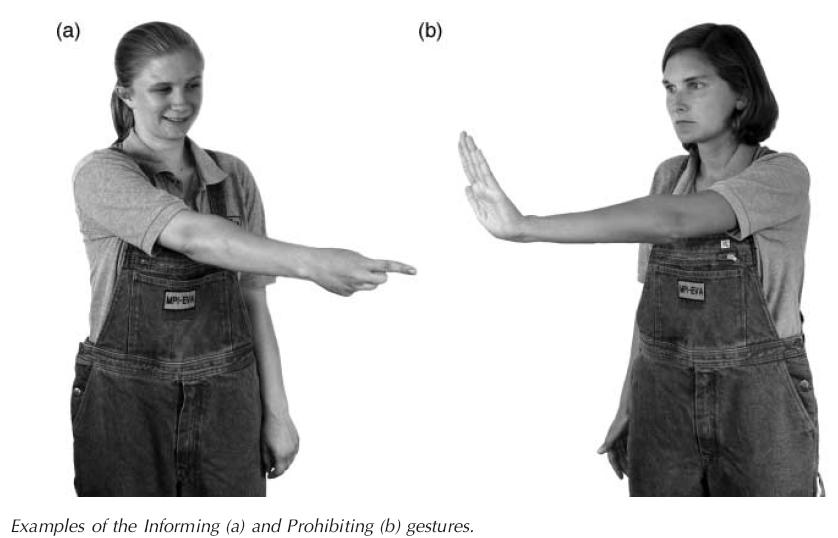
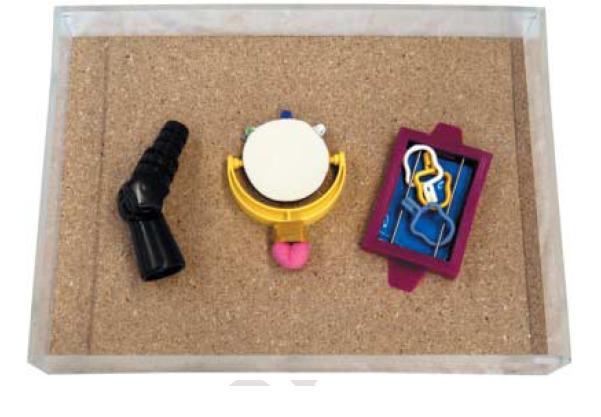
At 14 months of age for example, human children are able to successfully pass an object-choice task. In this task, children are presented with two upside-down buckets, one of which contains a toy, and the experimenter points toward the bucket where the toy is hidden. The child then turns to the right bucket and retrieves the toy. Although this task may appear simple, it is remarkable that chimpanzees fail it. In contrast to children, they fail to see the pointing gesture as a relevant cooperative signal within a shared attentional frame. Instead chimpanzees seem to think something along the lines of: “‘A bucket. So what? Now where’s the food?’ They do not understand that the pointing is intended to be ‘relevant’ to the searching as a shared activity (see Sperber & Wilson, 1986)” (Tomasello & Carpenter 2007: 122).


But this result is reversed in chimpanzees when instead of pointing cooperatively towards the bucket, the experimenter makes a prohibiting gesture by holding her arm out towards the correct container with her palm out, says something like “Don’t take this one” in a firm manner and then leaves the room. In this competitive context chimpanzees can successfully infer where the hidden reward. What is equally interesting is that 24 month old children do not retrieve the hidden toy possibly because they were better at cognitive control than 18 month old children and chimpanzees and were aware of the social and communicative conventions of the prohibiting action (Hermann & Tomasello 2006, see e.g. Miller et al. 2002, Tomasello 2008: 208ff. ).


Understanding Shared Experience

At the age they are able to solve a simple informative object-choice, infants also can keep track of who is familiar with some toy and who is not through shared experience.


In an experiment involving three toys and two experimenters, the first experimenter and the infant played together with two of the toys, then the first experimenter left the room. After that, the second exph the experimenter and the infant played with all three of the toys, but with two of them in a normal fashion and with one of them in a very excited manner. When the first experimenter then came back in ambiguously asked for “it” infants reliably gave them the toy they had an excited shared experience with. Control conditions clearly showed that the infants knew “which of these objects “we”—and not just me or you alone—had experienced in a special way in the immediate past: (Moll et al. 2008: 98). A linguistic experiment in which a mother played with three toys together with her child then left the room, and the child then played with a fourth novel toy together with an experimenter had similar results. When the mother came back and looked at the four toys and excitedly exclaimed “Oh, a modi, a modi!” the child successfully learned this as the word for the fourth novel object drawing on their experience of sharing common ground with the mother in respect to the first three toys, but not with the new toy (Akhtar et al. 1996).

Understanding Joint Commitments

In general, human children and infants seem to be much more interested in cooperation, sharing, and committing themselves to a shared goal and a shared experiential perspectives than other primates. In specific contexts chimpanzees exhibit joint, co-operative, coordinated hunting for small monkeys (Boesch & Boesch 1989), and human-raised enculturated chimpanzees successfully solve co-operative problem-solving tasks in which food could be retrieved only together with a non-competitive, familiar human adult both when it required parallel and complementary roles. When it comes to social games, however, such as one person rolling a ball down and another one catching it with a can (complementary), or making a wooden block jump on a trampoline (parallel), the chimpanzees showed no interested and played with single parts of the game set-up for themselves. 18 to 24 month-old human children on the other hand successfully took part in both the co-operative problem-solving tasks as well as the social games. What is more, in contrast to the chimpanzees the children actively tried to reengage the adult when he ceased doing his part of the co-operative activity in both problem-solving and social contexts. Children thus explicitly displayed skills of shared intentionality by being jointly committed to a shared goal with shared intentions. These skills can also be seen in the manifesting conversational and linguistic skills of children around that time (Tomasello 2003).

Pointing in Human Children and Chimpanzees


The shared intentionality infrastructure is also already present in communicative power of pantomiming and informative pointing just for the sake of sharing attention and sharing information which infants acquire around their first birthdays (Tomasello 2008: 111). These behaviours even include references to absent object or events such as something that is going on outside, happened in the past or will happen again in the future, a cup that is empty and should be filled, to something that is hidden or not present at the moment (Tomasello 2008: 116f.). Chimpanzee’s on the other hand, practically rarely point in natural contexts, and captive chimpanzees only do so when requesting something, using the human as a “social tool” (Tomasello 2006). A similar imperative behaviour has recently been observed in the wild: during grooming, chimpanzees sometimes point to a specific part of their body where they want to be scratched. (Pika & Mitani 2009). These "directed scratches" however, are also imperative in nature and not declarative.

In contrast, 12 to 18 month-olds also point co-operatively to inform others of the location of an object they are looking for. (Liszkowski et al. 2006 : 173). Generally humans infants and children have a natural tendency to be extremely cooperative in a variety of task and help others solve their problems
“even when the other is a stranger and they receive no benefit at all. However, our nearest primate relatives show some skills and motivations in this direction as well, and this suggests that the common ancestor to chimpanzees and humans already possessed some tendency to help before humans began down their unique path of hypercooperativeness.” (Warneken & Tomasello 2006: 1302 )

The evidence presented here strongly suggest that it indeed seems that social intelligence was a driving factor and the crucial foundation for what makes us unique.

But in addition, it seems that in the human lineage the “Machiavellian Intelligence Hypothesis,”, which sees social competition as the main causal factor for primate, including human brain evolution (Byrne & Whiten 1988, Humphrey 1976), does not apply across the board. Instead, it seems that the unique aspects of human cognition were driven, and are maybe even constituted by, collaboration, cooperation and the natural motivation to share experiences, intentions and perspectives, which then led to the advances in culture, technology, and higher-order cognition we see today (Moll & Tomasello 2007).

References:

Akhtar, N., Carpenter, M., & Tomasello, M. (1996). The role of discourse novelty in early word learning. Child Development, 67, 635-45.

Boesch, C. & Boesch, H. (1989): Hunting behavior of wild chimpanzees in the Taï-National Park. American Journal of Physical Anthropology 78(4), 547-573.

Byrne, R. & Whiten, A. (eds) (1988) Machiavellian intelligence: social expertise and the evolution of intellect in monkeys, apes and humans. Oxford, UK: Oxford University Press

Hare, Brian, and Michael Tomasello. (2005). Human-like social skills in dogs? Trends in Cognitive Science, 9, 439-444.

Herrmann, Esther. & Michael Tomasello, (2006). Apes' and children's understanding of cooperative and competitive motives in a communicative situation. Developmental Science, 9, 518-529

Humphrey, N. (1976) The social function of intellect. In Growing points in ethology (eds P. P. G. Bateson & R. A. Hinde), pp. 303–317. Cambridge, UK: Cambridge University Press.

Hurford, James M. (2007): The Origins of Meaning: Language in the Light of Evolution. Oxford: Oxford University Press.

Sperber, Dan and Deirdre Wilson (1995): Relevance: Communication and Cognition. Second Edition. Malden et al.: Blackwell.

Miller, Earl K., David J. Freedman and Jonathan D. Wallis (2002.) “The Prefrontal Cortex: Categories, Concepts and Cognition.” In: Phil. Trans. R. Soc. Lond. B 357: 1123–1136

Moll, Henrike and Michael Tomasello (2006): Level 1 Perspective-Taking at 24 Months of Age. British Journal of Developmental Psychology 24, 603–613

Liszkowski, U., Carpenter, M., Striano, T., & Tomasello, M. (2006). Twelve- and 18-month-olds point to provide information for others. Journal of Cognition and Development 7: 173-187.

Moll, Henrike, & Michael Tomasello. (2007) Co-operation and human cognition: The Vygotskian intelligence hypothesis. Philosophical Transactions of the Royal Society 362: 639-648.

Moll, Henrike., Richter, N., Carpenter, M., & Tomasello, M. (2008). Fourteen-month-olds know what ‘we’ have shared in a special way. Infancy, 13(1), 90-101

Tomasello, Michael (2003): Constructing A Language. A Usage-Based Approach. Cambridge, Massachusetts; London, England: Harvard University Press.

Tomasello, Michael (2008): The Origins of Human Communication. Cambridge, MA; London, England: MIT Press.

Tomasello, Michael and Malinda Carpenter (2007): “Shared Intentionality.” In: Developmental Science 10.1, 121-125.

Tomasello, Michael, Malinda Carpenter, Josep Call, Tanya Behne, and Henrike Moll (2005): Understanding and Sharing Intentions: The Origins of Cultural Cognition. In: Behavioral and Brain Sciences 28:5, 675–691.

Warneken, Felix. & Michael Tomasello, (2006). Altruistic helping in human infants and young chimpanzees. Science, 31, 1301 - 1303.

Tuesday, June 9, 2009

Michael Tomasello - Why We Cooperate

Michael Tomasello has a new book out in October called "Why We Cooperate." What is interesting about this publication is that Tomasello presents his findings on great ape and infant cognition and and social and developmental psychologist Carol Dweck, anthropologist Joan Silk, philosopher Brian Skyrms, and developmental psychologist Elizabeth Spelke respond to and explore the implications of his work in light of their own research.

Here's the description:

"Drop something in front of a two-year-old, and she's likely to pick it up for you. This is not a learned behavior, psychologist Michael Tomasello argues. Through observations of young children in experiments he himself has designed, Tomasello shows that children are naturally—and uniquely—cooperative. Put through similar experiments, for example, apes demonstrate the ability to work together and share, but choose not to.

As children grow, their almost reflexive desire to help—without expectation of reward—becomes shaped by culture. They become more aware of being a member of a group. Groups convey mutual expectations, and thus may either encourage or discourage altruism and collaboration. Either way, cooperation emerges as a distinctly human combination of innate and learned behavior.

In Why We Cooperate, Tomasello's studies of young children and great apes help identify the underlying psychological processes that very likely supported humans' earliest forms of complex collaboration and, ultimately, our unique forms of cultural organization, from the evolution of tolerance and trust to the creation of such group-level structures as cultural norms and institutions.

Scholars Carol Dweck, Joan Silk, Brian Skyrms, and Elizabeth Spelke respond to Tomasello's findings and explore the implications."

Monday, June 1, 2009

The Nature and Evolution of Human Cognition: Considerations from Comparative and Developmental Psychology


If we bear in mind the proposals for what (among other things) makes human cognition unique I summed up in my last post – along with the conjecture that our cognitive style may more be something of a idiosyncrasy due to a highly specific cognitive specialization instead of a definitive quantitative and qualitative advance over other styles of animal cognition, we can look for studies which further point in that direction.

Chimpanzees, for example, beat humans at certain memory tasks (Inoue & Matsuzawa 2007) and behave more rational in reward situations (Jensen et al. 2007). In addition, it has been shown that in tasks in the social domain, which are generally assumed to be cognitively complex, domesticated animals such as dogs and goats (Kaminski et al. 2005) fare similarly well or even outperform chimpanzees. It is entirely possible that the first signs of human uniqueness where first simply side-effects our self-domesticating lifestyle – the same way the evolution of social intelligence in dogs and goats is hypothesised to have come about –, acting on a complex primate brain (Hare & Tomasello 2005).

It is certainly a fact

that Homo sapiens has become ‘localized’ by having to depend upon learned, culture-specific modes of interacting.” (Bruner 2005: 693).
Humans are constantly immersed in culture and social interactions and at the same time extremely dependent on it, and human ontogeny fundamentally differs from that of any other primate species. Human infants are even more helpless and completely dependent on others, and remain unable to feed and care for themselves for a uniquely long time span. Furthermore, childhood and adolescence are two additional and prolonged states of mental development and cultural learning absent in any other species that seem to be vitally important for the development of culturally adept and cognitively highly sophisticated human beings (Locke & Bogin 2006).

The fact that social interaction, learning, and cultural transmission play such a vital and important role for children’s ongoing cognitive development indicates that hey have a biologically-based “adaptation for culture” which has to be operative from early on. Comparing young children’s and infants cognitive abilities with that of the other great apes may be a useful indicator of the biological foundations of what makes us uniquely human. In Addition, we can gain crucial insights on what platform the evolution of human cognition could have started because chimpanzees are “conservative species” that has always lived in tropical forests, which is why they didn’t have to change as much as we did to adapt to fundamentally new environments and selection pressures. This also means that chimpanzees are more similar to the last common ancestor we shared with them than we are (Gazzaniga 2008: 51).

If we now compare the performance of 2.5 year-old children and other great apes (in this case chimpanzees and orangutans) across a wide range of domains we indeed find that in some domains the differences are much more marked than in others. (see also, this post). In the physical domain, which includes the understanding of space, quantity and causality, the subjects were tested by rewards that were out of reach and could only be retrieved with a stick (causality), or had to locate a reward that was not directly accessible but had to be located (space). In the social domain, subjects had to follow “an actor’s gaze direction to a target,” solve “a simple but not obvious problem by observing a demonstrated solution” (social learning), or understand what an actor intended to do, but in the end failed to. (Intention attribution or Theory of Mind).

Generally, orangutans fared worst in most of the test, whereas chimpanzees and humans were quite similar in the physical domain. In some of the physical tasks, especially the one which required active tool use, chimpanzees even out performed human children. But in the causality tasks in which

“a judgment must be made before manipulation or choice” (Hermann et al. 2007:1362)
children were better. They were also better in inhibitory and cognitive control in general, something that is expected given what we know about the disproportionate dominance and prominence of higher-order prefrontal circuitry, which better enable a child’s brain
“to coordinate processing among its millions of neurons in order to direct them toward future goals.” (Miller et al. 2002: 1131)
than is the case in other great apes. According to the research group that did these experiments

“the current results provide strong support for the cultural intelligence hypothesis that human beings have evolved some specialized social-cognitive skills (beyond those of primates in general) for living and exchanging knowledge in cultural groups: communicating with others, learning from others, and “reading the mind” of others in especially complex ways“ (Hermann et al. 2007: 1365).

But as indicated by children’s performances in the causality task, and in congruence with the models of human cognition I’ve outlined above, the social domain is not the only catch-all distinctive property of human minds. Instead, the ability to re-interpret cognitive data in terms of more abstract properties such as “unobserved causal forces” and “mental states” seems to be distinctive foundation for excelling performances in both the physical and social domains. The authors find it plausible however, that

"understanding hidden causal forces evolved first to enable humans to understand the mental states of other persons, and this generalized only later to the physical domain.”

This is why we are justified in further looking for uniquely human attributes in the socio-cognitive development of children.


References:


Normal 0 21

Bruner, Jerome (2005): “Homo Sapiens, a localized species”. In: Behavioral and Brain Sciences 28:5, 694–695.


Gazzaniga, Michael S. (2008): Human: The Science of What Makes us Unique. New York: Harper-Collins.

Hare, B., & Tomasello, M. (2005). Human-like social skills in dogs? Trends in Cognitive Science, 9, 439-444.


Hermann, Esther, Josep Call, María Victoria Hernández-Lloreda, Brian Hare, and Michael Tomasello. 2007. “Humans Have Evolved Specialized Skills of Social Cognition: The Cultural Intelligence Hypothesis” Science 317: 1360-1366.


Inoue S. and T. Matsuzawa (2007). Working memory of numerals in chimpanzees. Current Biology, 17(23), R1004-R1005.


Jensen, Keith, Josep Call and Michael Tomasello (2007): Chimpanzees Are Rational Maximizers in an Ultimatum Game. Science 318: 107-109


Kaminski, Juliane, Riedel, J., Call, J. & Tomasello, M. (2005) Domestic goats (Capra hircus) follow gaze direction and use social cues in an object choice task. Animal Behaviour, 69(1), 11-18.


Locke, John L. and Barry Bogin. (2005) “Language and life history: A new perspective on the development and evolution of human language” Behavioral and Brain Sciences 29, 259–325.


Miller, Earl K., David J. Freedman and Jonathan D. Wallis (2002.) “The Prefrontal Cortex: Categories, Concepts and Cognition.” In: Phil. Trans. R. Soc. Lond. B 357: 1123–1136.

Thursday, September 11, 2008

Tomasello - The Origins of Human Communication


I just noticed that Michael Tomasello’s new book „The Origins of Human Communication” is out. The book is based on his Jean Nicod Lectures, which were delivered in Paris in the Spring of 2006 (you can watch the videos here. although the quality isn’t great, the talks are still fun to watch because they feature a lot of videos of the experiments with non-human primates and human children done by Tomasello and his colleagues).

“The Jean Nicod Lectures are delivered annually in Paris by a leading philosopher of mind or philosophically oriented cognitive scientist” and have featured, among others, Jerry Fodor, Donald Davidson, John Searle, Dan Dennett, and Ray Jackendoff.

(It’s interesting to see that the prizes were often given to people who are known to have the exact opposite stance than a previous prize winner. There have been controversies, for example, between Searle and Davidson, and between Dennett and Fodor – see for example here. So one could say that there seems to be some kind of attempt of establishing an equilibrium in regards of who is awarded the prize. So after someone from the nativist/generativist/formalist camp has received the prize a couple of years ago, it was time for an enemy of this position.
But there are various reasons to doubt this line of reasoning: firstly, my argument was intended mostly as a joke, secondly there are a lot of prize winners who cannot be clearly be put into camps that are diametrically opposed to one another (of course, in fact almost nobody can), and my controversy-examples are very bad, given that Davidson and Fodor seem to have a gripe with about practically everyone in the cognitive sciences, philosophy of mind, and other related disciplines.

But most importantly, Michael Tomasello is a great scientist whose works is absolutely fantastic, and he definitely deserves all the prizes he can get. /end of rambling)

Here’s the description over at The MIT Press site:

„Human communication is grounded in fundamentally cooperative, even shared, intentions. In this original and provocative account of the evolutionary origins of human communication, Michael Tomasello connects the fundamentally cooperative structure of human communication (initially discovered by Paul Grice) to the especially cooperative structure of human (as opposed to other primate) social interaction.

Tomasello argues that human cooperative communication rests on a psychological infrastructure of shared intentionality (joint attention, common ground), evolved originally for collaboration and culture more generally. The basic motives of the infrastructure are helping and sharing: humans communicate to request help, inform others of things helpfully, and share attitudes as a way of bonding within the cultural group. These cooperative motives each
created different functional pressures for conventionalizing grammatical constructions. Requesting help in the immediate you-and-me and here-and-now, for example, required very little grammar, but informing and sharing required increasingly complex grammatical devices.

Drawing on empirical research into gestural and vocal communication by great apes and human infants (much of it conducted by his own research team), Tomasello argues further that humans' cooperative communication emerged first in the natural gestures of pointing and pantomiming. Conventional communication, first gestural and then vocal, evolved only after humans already possessed these natural gestures and their shared intentionality infrastructure along with skills of cultural learning for creating and passing along jointly understood communicative conventions. Challenging the Chomskian view that linguistic knowledge is innate, Tomasello proposes instead that the most fundamental aspects of uniquely human communication are biological adaptations for cooperative social interaction in general and that the purely linguistic dimensions of human communication are cultural conventions and constructions created by and passed along within particular cultural groups.“
I’m really looking forward to read his book. At the MIT Press site you can download the first chapter (here). I’ll have a look at it and maybe I’ll post about it later.

Friday, July 25, 2008

Hiatus (+A Short Note on Jean Piaget’s Theory of Cognitive Development)

It will be a while until I’ll be able to post again, because I’m at my fiancée’s parents’ home over the semester holidays and won’t have access to the internet. After that I’ll have to prepare for my year abroad in Nottingham, which starts mid-September, but I’ll try to post a bit more regularly starting late August.
Right now I’m busy writing a term paper on Nietzsche’s view on the evolution of language, but I also try to occasionally have a look at other texts that interest me. So here’s one interesting (well, at least I think it’s interesting…) thing:

Yesterday I’ve read the first chapter of “The Development of Children” by Michael Cole, Sheila Cole, and Cynthia Lightfoot.
There, they give a short overview over influential theories of human development. As already discussed on this blog, Jean Piaget is a very influential thinker on the topic of children’s conceptualizations of mental states and differing perspectives on the same event.
Piaget thinks that young children are self-centered and only see things from an egocentric perspective that they are unable to transcend. As I’ve discussed elsewhere, there is a lot of evidence that this generalization is exaggerated, and that the ability to take other cognitive perspectives arises between the ages 4-5, an age much younger than Piaget hypothesised.
Another crucial assumption in Piaget’s theory is that there is a stage at which children’s understanding and experiencing the world fundamentally changes. Before this change, they conceive of thinking as a bodily process, for example, the act of speaking. Only older children conceive of thinking as something invisible and unobservable. According to Piaget, children’s conceptualization of thinking fundamentally changes about the age of 10 to 11. This is when children first become able to think about thinking as a mental process which cannot be seen. Piaget used clinical interviews as evidence for his theory. Here are two interviews he did with younger children (taken from Cole at al. 2005: 21f.):

„7-YEAR-OLD
Piaget:… You know what it means to think?
Child: Yes.
Piaget: Then think of your house. What do you think with?
Child: With the mouth”


Even when children get explicit hints, they aren’t able to think of mental states as internal processes:
“5-YEAR-OLD
Piaget: When you are in bed and you dream, where is the dream?
Child: In my bed, under the blanket.
Piaget: Is the dream there when you sleep?
Child: Yes, it is in my bed beside me.
[Piaget writes: “We tried suggestion:”]: Is the dream in you head?
[The child explicitly rejects the possibility]: It is I that am in the dream: it isn’t in my head.”


With older children that have reached the next developmental stage, however, the picture is quite different:
“11-YEAR-OLD
Piaget: Where is thought?
Child: In the head.
Piaget: If someone opened your head would he see your thought?
Child: No.
Piaget: What is a dream?
Child: It’s a thought
Piaget: Are the eyes open or shut?
Child: Shut.
Piaget: Where is the dream whilst you are dreaming?
Child: In the head
Piaget: Not in front of you?
Child: It’s as if (!) you could see it”


The evidence seems pretty straightforward.
However, often children are not fully able to express their thoughts and conceptualizations verbally, so a child’s practical understanding of mental processes might be different from what it says about them.
There is, for example, massive evidence that 4-5 year-old children are able to realize that other people have wrong representations of the world (i.e. that they have false beliefs). They are also able to attribute unobservable mental states like knowledge to others, that is, they have a Theory of Mind. At age 3, children are already able to grasp the fact that people have other desires and tastes as they have, for example, that someone else likes broccoli although they themselves don’t.
These facts made me a bit suspicious of the interviews Piaget reported, especially as I do not know how many children he actually asked. So I asked my fiancée’s little brother, who is much much younger than her: 4. (4,11 to be precise)
So here is my first informal interview (translated from German):

“4-YEAR-OLD”
Me: Can you actually think?
Child: Well um yes
Me: Then think of a house. What do you think with?
Child (points at his forehead): Umm… With the brain!”


So what’s the explanation? Even though my fiancée’s brother is a bright kid, it’s improbable that he bridged a developmental gap of 6 years. And I have a hunch that although not as many kids at his age would have answered with “the brain”, still a lot would have said that thoughts are in the head.

To see how sophisticated his conceptualization really was, I tried to replicate Piaget’s Interview with the 11-year-old kid:

4-YEAR-OLD
Me: Do you know what a thought is?
Child: Yes.
Me: Where is thought?
Child: In the brain.
Me: If someone opened your head would he see your thought?
Child: No.
Me: Do you know what a dream is?
Child: Yes.
Me: Are the eyes open or shut?
Child: Shut.
Me: Where is the dream whilst you are dreaming?
Child: In the brain.
Me: Not in front of you?
Child: No.


One possible explanation is a cultural-historical one. Piaget’s interviews are more than 80 years old and the culture and developmental environment of Germany in the year 2008 is certainly different from that of France in the 1920ies. There are of course social factors involved and it would be interesting to check for variation if more kids were interviewed.
One could also argue that my fiancée’s brother’s comprehension of mental states is still a mechanistic, bodily one. Instead of the physical organ of the mouth, the thinking is done with another physical organ: the brain. But then this would surely also be the answer of many adults. Furthermore, in his conceptualization a thought isn’t located in the brain in a trivial way: even if you opened his head, you couldn’t see it. Interestingly, as I remarked that it was pretty cool that he thought that thoughts are being produced by the brain, he said: “What else should I think with…? …the head?!”, something which indicates that he didn’t get behind the metaphorical link between the head and a mental states, and thus maybe didn’t see my questions as aiming at invisible processes of the mental world, but being directed at the factual/physical domain, but I’m not so sure about that.

To end this post with a provocative question: could his answer imply the death of folk dualism? With increasing education and the all-pervasiveness of biological talk in the media (Think of the press coverage fMRI studies receive) and in everyday speech, the view that the mind is what the brain does might become a new common place folk theory and might be acquired at ever younger ages.

There is no question that the children of today will grow up in a fundamentally different world than even I did, but the really interesting question is how this growing up in a hypertechnological, hypermedial, hyperbiological (given the dominance of neuroscientific genetic and medical discussions in the public sphere) and often reductionist world will change and influence their folk theories of how the world works as well as their cognitive conceptualizations. I’m really looking forward to the future.
See you in late August.

Thursday, April 24, 2008

Perspectives on “Perspective” – Part I

Since in my previous posts on the phenomenon of perspective - i.e. the fact that we tend to view and (re)present thoughts and states of facts in the world in highly specifiy, perspectival ways, - I have mainly focused on the work of German linguist Wilhelm Köller and his (2004) book “Perspektivität und Sprache” (Perspectivity and Language) and how his thoughts relate to those of other linguists, developmental psychologists, cognitive scientists, etc., I wanted to represent more fully the work of some scholars whose work also focuses on the notion of perspective.

Scholars who make important contributions under the heading of perspective or perspectivity include, for example.:

- developmental and comparative psychologists Michael Tomasello and Henrike Moll from the Max Planck Institute for Evolutionary Anthropology,

- psychologist Carl F. Graumann, former Professor of Psychology at Heidelberg University, who died in 2007

- linguist Brian MacWhinney, Professor of Psychology at Carnegie Mellon University, Pittsburgh, Pennsylvania, USA

- developmental psychologist Josef Perner of the University of Salzburg, Austria

- cognitive linguist Ronald Langacker, professor emeritus at the University of California, San Diego.

- cognitive linguist Leonard Talmy, Professor Emeritus of Linguistics at the University at Buffalo, State University of New York


But in order to get a more comprehensive view of the phenomenon of perspective in general, let’s first untangle the various forms of inquiry into the whole range of phenomena that can be subsumed under the heading of perspective.

Basically, we can look at perspective from various points of views, which of course, have to be integrated for a full grasp of the notion of perspective. For example:

1. Perspective from a developmental/ontogenetic point of view

From a developmental perspective we can ask when and how children come to be able to take the viewpoint of another person, first visually (Level 1, perspective taking, e.g. Flavell 1988, Moll & Tomasello 2006), then on a mental level of “putting oneself in the cognitive shoes of someone else” (Tomasello 1999). More generally we can ask, how Children become able to grasp not only that an object looks different from a different point of view, but also how the object might look like from a certain perspective (Level 2, perspective-taking, Flavell 1988).

In this regard it’s of special interest that perspective taking is a social-cognitive skill, and thus to look at children’s perspective taking and setting in cooperative and interactive situations. On a later stage of development, it’s a major research issue how children come to construe a “Theory of Mind” which allows them to attribute mental states to others, and to include these attributions in their predictions and thus also their interactions with other people.

This ability may reflect a full understanding of the concept of perspective, allowing children to compare differing perspectives on a phenomenon and to select amongst competing perspectives (Perner et al. 2002).

It is also likely that the development of an concept of self crucially depends on our interactions with others (Mead 1934), and especially on the child’s developing ability to understand perspectives. This allows her to contrast various views of the world and to understand herself by adopting other people’s perspective on herself, thus learning to see herself through the eyes of others. She also learns to see herself from different temporal perspectives and episodes, and to integrate these different perspectives into a unified view of herself as a person (Moll 2007)

2. Perspective from an Evolutionary/Comparative point of view

From an evolutionary perspective, we can look at how the ability to take and set perspective arose in the phylogenetic history of our species, and on which evolutionary foundations this ability was built. We can thus pose the same questions we asked in regard to children for the role-taking abilities of chimpanzees and other non-human primates (for a review see Tomasello et al. 2005).

Another key issue is the question which role cooperative behaviors with shared goals and intentions, which essentially depend on the notion of perspective, played in the cultural as well as evolutionary history .

Blending this area of research with the former one, we can also assess whether the unique perspectival qualities of human cognition and human interaction lead to special forms of perspectival cognitive representation in ontogenetic development (Moll & Tomasello 2007)

This is of course deeply related to the question how our lineage came to display this diverse set of modern human behaviors, symbolic and otherwise, such as language and especially the ability to understand others as intentional mental agents, which is the foundation of “cumulative” cultural evolution, innovation and shared artifacts, symbols, and institutions (Tomasello et al. 2005, Sterelny 2003). Tomasello et al.(2005) propose that it is the evolution of “shared intentionality”, i.e. the ability to jointly attend to a situation and to

"participate with others in collaborative activities with shared goals and intentions.” (Tomasello et al. 2005: 675),
was the major stepping stone in the evolution of behaviorally modern humans.

In accordance with th Tomasello et al’s (2005) and Moll & Tomasello’s (2007) hypothesis that this ability is linked to the evolution of uniquely human forms of perspectival mental representations, Benoît Dubreuil (2008) also challenges the role of language as being the driving force behind behavioral modernity, and instead proposes that the key “

"cognitive mechanism behind modern sapiens behavior is one of the general mechanisms underlying the higher form of ToM: the ability to hold in mind a stable representation of conflicting perspectives on objects”
and that this change is especially salient in human evolution by 85,000BP. His main argument is that there is no evidence that the production of the archaeological artefacts that appear around that time, for example, engraved ochres or marine shell beads, presupposes any symbolic abilities of their producers.This is because
"from an archaeological perspective, there is no real way to tell aesthetic and symbolic functions apart.“
But what they definitely entail is that their makers knew that the object they are making looks good from various viewpoints, and especially, in the case of self-decoration, that it makes the wearer look good from someone else’s perspective.

3. Perspective from a cognitive point of view

Perspective is implicated in all forms of cognition in various ways. For starters, there is the fact of embodiment, i.e. the fact that “minds have bodies that are situated in environments” (Poirier et al. 2005: 741). This means, that all perception is essentially of a perspectival nature dependent on how our minds are ‘grounded’ in various kinds of interactions with other physical processes (e.g. Barsalou 2008). Perspective thus refers to the way we categorize and represent the world. All cognition is therefore point of view dependent, or to be more precise, dependent on the frame of reference in which we transport “the parts of an object or the elements of a complex state of affairs and their interrelations” (Graumann 2002: 25). We can thus unify diverging perspectives, construe various perspectives simultaneously, and mentally manipulate them in the domain of our frame of reference, or cognitive coordinate system (see for example Bischof-Köhler & Köhler 2007) We can thus “project” ourselves into various frames of reference. Essentially these perspectives can also be “decoupled” (Sterelny 2003) from our immediate surroundings, and we can mentally travel through time and imagine ourselves in past, future, and hypothetical situations.

Interestingly, neuroscientific evidence points toward the assumption that Thinking about the future, episodic remembering, conceiving the perspective of others (theory of mind) and navigation” engage the same cortical network, “which suggests that they share similar reliance on internal modes of cognition and on brain systems that enable perception of alternative vantage points.” (Buckner & Carrol 2007). Although the authors of this study prefer the term ‘self-projection’, we could also construe these abilities as drawing on the core principle of understanding and taking perspectives.

These observations lend support to the idea that to understand perspectives, we make use of a single representational format, namely a basic frame of reference, as systemic space or coordinate system in which we construe and into which we transport conceptual representations. This idea is further supported by the neuroscientific evidence that

“simulated actions in the first and in the third person perspectives share common representations” (Anquetil & Jeannerod 2007)
i.e. that they work on the same representation, which can be used from different perspectives via a changing Origo- or Viewpoint (Bühler 1934) within the frame of reference.

Another question is the nature of the concepts employed in categorizing and cognizing the world around us. There are indicators that concepts, just like linguistic symbols, are of an essentially perspectival nature, with a specific ‘highlighting-and-hiding pattern’ (Lakoff & Johnson 1980). If we take Lawrence W. Barsalou’s view of concepts as internally simulated perceptual traces, with abstract concepts “grounded in complex simulations of combined physical and introspective events. (Barsalou 1999), perspective also plays a central role in the constitution and online activation of concepts and, as we will see, also the interpretation of complex events via metaphorical mappings.

That’s it for now. In my next post I will write a bit about perspective from the viewpoint of cognitive linguistics and philosophy.

On a related note, the latest edition of the Four Stone Hearth is out. Go have a look!

References:

Barsalou, Lawrence W. (1999): Perceptual Symbol Systems. In: Behavioral and Brain Sciences 22.4, 577-609.

Barsalou, Lawrence W (2008): Grounded Cognition. In: Annual Review of Psychology 59, 617-645.

Bischof-Köhler, Doris & [My paper]Norbert Bischof (2007): Is mental time travel a frame-of-reference issue? Behavioral and Brain Sciences 30 (3):316-7

Buckner, RL & DC Carroll (2007): Self-projection and the brain. In: Trends in Cognitive Sciences, 11.2Bühler, Karl (1934): Sprachtheorie. Die Darstellungsfunktion der Sprache. Jena: Gustav Fischer.

Dubreuil, Benoît (2008): What do modern behaviours in Homo sapiens imply for the evolution of language, in A. D. M. Smith, K. Smith, and R. Ferrer i Cancho (eds.), The Evolution of Language. Proceedings of the 7th International Conference (Evolang 7), World Scientific, 99-106.

Flavell, John H. (1988): The Development of Children’s Knowledge about the Mind: From Cognitive Connections to Mental Representations. In: Janet W. Astington, Paul L. Harris und David R. Olson (eds.): Developing Theories of Mind. Cambridge: Cambridge University Press, 141-172.

Graumann, Carl F. (2002): Explicit and Implicit Perspectivity. In: Carl F. Graumann und Werner Kallmeyer (Eds): Perspective and Perspectivation in Discourse. Amsterdam, Philadelphia: John Benjamins Publishing Company, 25-40.

Köller, Wilhelm. 2004. Perspektivität und Sprache. Zur Struktur von Objektivierungsformen in Bildern, im Denken und in der Sprache. Berlin/ New York: de Gruyter.

Lakoff, George, and Mark Johnson 1980. Metaphors we live by. Chicago: University of Chicago Press.

Mead, George Herbert. (1934) Mind, Self and Society. Chicago: University of Chicago Press.

Moll, Henrike (2007): Person und Perspektivität – Kooperation und soziale Kognition beim Menschen. In F. Kannetzky & H. Tegtmeyer (Eds.), Leipziger Schriften zur Philosophie. Personalität – Studien zu einem Schlüsselbegriff der Philosophie, 37-56. Leipzig: Leipziger Universitätsverlag.

Moll, Henrike und Michael Tomasello (2006): Level 1 Perspective-Taking at 24 Months of Age. In: British Journal of Developmental Psychology 24, 603-613.

Moll, Henrike, & Michael Tomasello. 2007. Co-operation and human cognition: The Vygotskian intelligence hypothesis. Philosophical Transactions of the Royal Society 362: 639-648.

Perner, J., Stummer, S., Sprung, M., & Doherty, M. (2002). Theory of mind finds its Piagetian perspective: Why alternative naming comes with understanding belief. Cognitive Development, 17, 1451-1472.

Poirier, Pierre, Benoit Hardy-Vallée and Jean-Frédéric Depasquale.2005. “Embodied Categorization.” In: Handbook of Categorization in Cognitive Science. Eds. Henri Cohen and Claire Lefebvre. Amsterdam: Elsevier, 2005.

Sterelny, Kim (2003): Thought in a Hostile World: The Evolution of Human Cognition. Malden: Blackwell.

Tomasello, Michael (1999): The Cultural Origins of Human Cognition. Cambridge, Massachusetts; London, England: Harvard University Press.

Tomasello, M., Carpenter, M., Call, J., Behne, T., & Moll, H. (2005). Understanding and sharing intentions: the origins of cultural cognition. Behavioral and Brain Sciences, 28, 675– 735.