Showing posts with label Shared Intentionality. Show all posts

Friday, September 3, 2010

Is 'Shared Intentionality' the Foundation of Human Uniqueness?


Wow, I can't believe that it's been two months since I last posted anything. But I'm still working on my last term papers and preparing for writing my state examination thesis (similar to a master's thesis), so I rarely find any time to blog.
But I've been meaning to repost a blog post I wrote over at replicated typo - where I've become a contributor - about the concept of "shared intentionality" (see e.g. Tomasello & Carpenter 2007). So here it is:

Shared or collective intentionality is the ability and motivation to engage with others in collaborative, co-operative activities with joint goals and intentions. (Tomasello et al. 2005). The term also implies that the collaborators’ psychological processes are jointly directed at something and take place within a joint attentional frame (Hurford 2007: 320, Tomasello et al. 2005).


Michael Tomasello and his colleagues at the Max-Planck-Institute for Evolutionary Anthropology in Leipzig, Germany have proposed that shared intentionality and the cognitive infrastructure supporting it may be the crucial feature that makes humans unique.

(You can hear Michael Tomasello talk about shared intentionality in his brief 2009 acceptance speech for the prestigeous "Hegel-Price" here. Transcript here)

Understanding Pointing

The infrastructure of this capacity requires abilities that are present in humans at a surprisingly young age. Although human children only know what other can see and what the cannot see at 24 months of age (Moll & Tomasello 2006). other social cognitive skills appear at a much earlier date. (Chimpanzees, interestingly, appear to only know what another one sees only in competitive situations, i.e. when there are two rewards and one of them is in plain sight of a dominant chimpanzee, the sub-dominant chimpanzee takes the one that is hidden from view (Hare & Tomasello 2004).)

At 14 months of age for example, human children are able to successfully pass an object-choice task. In this task, children are presented with two upside-down buckets, one of which contains a toy, and the experimenter points toward the bucket where the toy is hidden. The child then turns to the right bucket and retrieves the toy. Although this task may appear simple, it is remarkable that chimpanzees fail it. In contrast to children, they fail to see the pointing gesture as a relevant cooperative signal within a shared attentional frame. Instead chimpanzees seem to think something along the lines of: “‘A bucket. So what? Now where’s the food?’ They do not understand that the pointing is intended to be ‘relevant’ to the searching as a shared activity (see Sperber & Wilson, 1986)” (Tomasello & Carpenter 2007: 122).
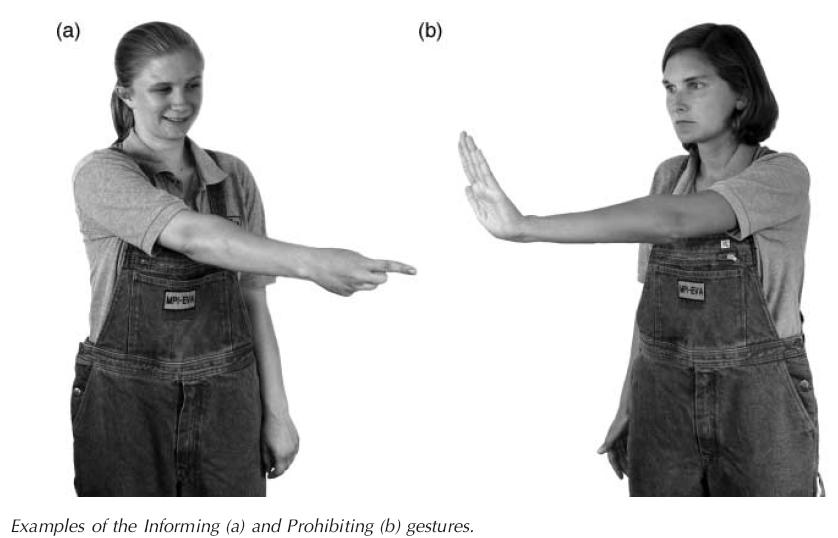


But this result is reversed in chimpanzees when instead of pointing cooperatively towards the bucket, the experimenter makes a prohibiting gesture by holding her arm out towards the correct container with her palm out, says something like “Don’t take this one” in a firm manner and then leaves the room. In this competitive context chimpanzees can successfully infer where the hidden reward. What is equally interesting is that 24 month old children do not retrieve the hidden toy possibly because they were better at cognitive control than 18 month old children and chimpanzees and were aware of the social and communicative conventions of the prohibiting action (Hermann & Tomasello 2006, see e.g. Miller et al. 2002, Tomasello 2008: 208ff. ).


Understanding Shared Experience

At the age they are able to solve a simple informative object-choice, infants also can keep track of who is familiar with some toy and who is not through shared experience.
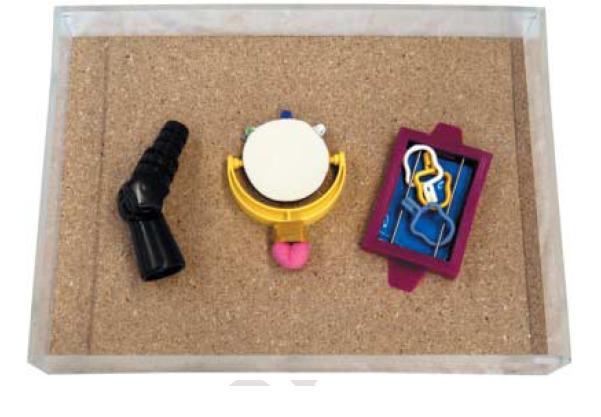

In an experiment involving three toys and two experimenters, the first experimenter and the infant played together with two of the toys, then the first experimenter left the room. After that, the second exph the experimenter and the infant played with all three of the toys, but with two of them in a normal fashion and with one of them in a very excited manner. When the first experimenter then came back in ambiguously asked for “it” infants reliably gave them the toy they had an excited shared experience with. Control conditions clearly showed that the infants knew “which of these objects “we”—and not just me or you alone—had experienced in a special way in the immediate past: (Moll et al. 2008: 98). A linguistic experiment in which a mother played with three toys together with her child then left the room, and the child then played with a fourth novel toy together with an experimenter had similar results. When the mother came back and looked at the four toys and excitedly exclaimed “Oh, a modi, a modi!” the child successfully learned this as the word for the fourth novel object drawing on their experience of sharing common ground with the mother in respect to the first three toys, but not with the new toy (Akhtar et al. 1996).

Understanding Joint Commitments

In general, human children and infants seem to be much more interested in cooperation, sharing, and committing themselves to a shared goal and a shared experiential perspectives than other primates. In specific contexts chimpanzees exhibit joint, co-operative, coordinated hunting for small monkeys (Boesch & Boesch 1989), and human-raised enculturated chimpanzees successfully solve co-operative problem-solving tasks in which food could be retrieved only together with a non-competitive, familiar human adult both when it required parallel and complementary roles. When it comes to social games, however, such as one person rolling a ball down and another one catching it with a can (complementary), or making a wooden block jump on a trampoline (parallel), the chimpanzees showed no interested and played with single parts of the game set-up for themselves. 18 to 24 month-old human children on the other hand successfully took part in both the co-operative problem-solving tasks as well as the social games. What is more, in contrast to the chimpanzees the children actively tried to reengage the adult when he ceased doing his part of the co-operative activity in both problem-solving and social contexts. Children thus explicitly displayed skills of shared intentionality by being jointly committed to a shared goal with shared intentions. These skills can also be seen in the manifesting conversational and linguistic skills of children around that time (Tomasello 2003).

Pointing in Human Children and Chimpanzees


The shared intentionality infrastructure is also already present in communicative power of pantomiming and informative pointing just for the sake of sharing attention and sharing information which infants acquire around their first birthdays (Tomasello 2008: 111). These behaviours even include references to absent object or events such as something that is going on outside, happened in the past or will happen again in the future, a cup that is empty and should be filled, to something that is hidden or not present at the moment (Tomasello 2008: 116f.). Chimpanzee’s on the other hand, practically rarely point in natural contexts, and captive chimpanzees only do so when requesting something, using the human as a “social tool” (Tomasello 2006). A similar imperative behaviour has recently been observed in the wild: during grooming, chimpanzees sometimes point to a specific part of their body where they want to be scratched. (Pika & Mitani 2009). These "directed scratches" however, are also imperative in nature and not declarative.

In contrast, 12 to 18 month-olds also point co-operatively to inform others of the location of an object they are looking for. (Liszkowski et al. 2006 : 173). Generally humans infants and children have a natural tendency to be extremely cooperative in a variety of task and help others solve their problems
“even when the other is a stranger and they receive no benefit at all. However, our nearest primate relatives show some skills and motivations in this direction as well, and this suggests that the common ancestor to chimpanzees and humans already possessed some tendency to help before humans began down their unique path of hypercooperativeness.” (Warneken & Tomasello 2006: 1302 )

The evidence presented here strongly suggest that it indeed seems that social intelligence was a driving factor and the crucial foundation for what makes us unique.

But in addition, it seems that in the human lineage the “Machiavellian Intelligence Hypothesis,”, which sees social competition as the main causal factor for primate, including human brain evolution (Byrne & Whiten 1988, Humphrey 1976), does not apply across the board. Instead, it seems that the unique aspects of human cognition were driven, and are maybe even constituted by, collaboration, cooperation and the natural motivation to share experiences, intentions and perspectives, which then led to the advances in culture, technology, and higher-order cognition we see today (Moll & Tomasello 2007).

References:

Akhtar, N., Carpenter, M., & Tomasello, M. (1996). The role of discourse novelty in early word learning. Child Development, 67, 635-45.

Boesch, C. & Boesch, H. (1989): Hunting behavior of wild chimpanzees in the Taï-National Park. American Journal of Physical Anthropology 78(4), 547-573.

Byrne, R. & Whiten, A. (eds) (1988) Machiavellian intelligence: social expertise and the evolution of intellect in monkeys, apes and humans. Oxford, UK: Oxford University Press

Hare, Brian, and Michael Tomasello. (2005). Human-like social skills in dogs? Trends in Cognitive Science, 9, 439-444.

Herrmann, Esther. & Michael Tomasello, (2006). Apes' and children's understanding of cooperative and competitive motives in a communicative situation. Developmental Science, 9, 518-529

Humphrey, N. (1976) The social function of intellect. In Growing points in ethology (eds P. P. G. Bateson & R. A. Hinde), pp. 303–317. Cambridge, UK: Cambridge University Press.

Hurford, James M. (2007): The Origins of Meaning: Language in the Light of Evolution. Oxford: Oxford University Press.

Sperber, Dan and Deirdre Wilson (1995): Relevance: Communication and Cognition. Second Edition. Malden et al.: Blackwell.

Miller, Earl K., David J. Freedman and Jonathan D. Wallis (2002.) “The Prefrontal Cortex: Categories, Concepts and Cognition.” In: Phil. Trans. R. Soc. Lond. B 357: 1123–1136

Moll, Henrike and Michael Tomasello (2006): Level 1 Perspective-Taking at 24 Months of Age. British Journal of Developmental Psychology 24, 603–613

Liszkowski, U., Carpenter, M., Striano, T., & Tomasello, M. (2006). Twelve- and 18-month-olds point to provide information for others. Journal of Cognition and Development 7: 173-187.

Moll, Henrike, & Michael Tomasello. (2007) Co-operation and human cognition: The Vygotskian intelligence hypothesis. Philosophical Transactions of the Royal Society 362: 639-648.

Moll, Henrike., Richter, N., Carpenter, M., & Tomasello, M. (2008). Fourteen-month-olds know what ‘we’ have shared in a special way. Infancy, 13(1), 90-101

Tomasello, Michael (2003): Constructing A Language. A Usage-Based Approach. Cambridge, Massachusetts; London, England: Harvard University Press.

Tomasello, Michael (2008): The Origins of Human Communication. Cambridge, MA; London, England: MIT Press.

Tomasello, Michael and Malinda Carpenter (2007): “Shared Intentionality.” In: Developmental Science 10.1, 121-125.

Tomasello, Michael, Malinda Carpenter, Josep Call, Tanya Behne, and Henrike Moll (2005): Understanding and Sharing Intentions: The Origins of Cultural Cognition. In: Behavioral and Brain Sciences 28:5, 675–691.

Warneken, Felix. & Michael Tomasello, (2006). Altruistic helping in human infants and young chimpanzees. Science, 31, 1301 - 1303.

Monday, May 25, 2009

Six Candidates for What Makes Human Cognition Uniquely Human


One of the key candidates for what makes human cognition unique is of course language and symbolic thought. We are “the articulate Mammal” (Aitchison 1998) and an “animal symbolicum” (Cassirer 2006: 31). And if one defining feature truly fits our nature, it is that we are the “symbolic species” (Deacon 1998). But as evolutionary anthropologists Michael Tomasello and his colleagues argue, “saying that only humans have language is like saying that only humans build skyscrapers, when the fact is that only humans (among primates) build freestanding shelters at all” (Tomasello et al. 2005: 690).


Language and Social Cognition

According to them and many other researchers, language and symbolic behaviour, although they certainly are crucial features of human cognition, are derived from human beings’ unique capacities in the social domain. As Willard van Orman Quine pointed out, language is essential a “social art” (Quine 1960: ix). Specifically, it builds on the foundations of infants’ capacities for joint attention, intention-reading, and cultural learning (Tomasello 2003: 58). Linguistic communication, in this view, is essentially a form of joint action rooted in common ground between speaker and hearer (Clark 1996: 3 & 12), in which they make “mutually manifest” relevant changes in their cognitive environment (Sperber & Wilson 1995). This is the precondition for the establishment and (co-)construction of symbolic spaces of meaning and shared perspectives (Graumann 2002, Verhagen 2007: 53f.). These abilities, then, had to evolve prior to language, however great language’s effect on cognition may be in general (Carruthers 2002), and if we look for the origins and defining features of human uniqueness we should probably look in the social domain first.

Corroborating evidence for this view comes from comparisons of brain size among primates. Firstly, there are significant positive correlations between group size and primate neocortex size (Dunbar & Shultz 2007). Secondly, there is also a positive correlation between technological innovation and tool use – which are both facilitated by social learning – on the one hand and brain size on the other (Reader and Laland 2002). Our brain, it seems, is essential a “social brain” that evolved to cope with the affordances of a primate social world that frequently got more complex (Dunbar & Shultz 2007, Lewin 2005: 220f.). Thus, “although innovation, tool use, and technological invention may have played a crucial role in the evolution of ape and human brains, these skills were probably built upon mental computations that had their origins and foundations in social interactions” (Cheney & Seyfarth 2007: 283).


Language, Mental Representations, and Symbolic Thought


But this of course does not mean that we expect all other unique aspects of human cognition to be derivative of social cognition. The development of higher social cognition only presented the enabling context and cognitive starting point for other human mental capacities to evolve. To pick up the example again, language, for instance, does not only have an interactive function but also a symbolic one. It creates ‘symbolic assemblies’ that function as form-meaning pairings (Evans & Green 2006: 6f.). But the ability to acquire arbitrary symbolic units itself does not appear to be uniquely human, as it has been demonstrated in great apes, parrots, dolphins and dogs (see Tomasello 2008: 254ff.). But there are two essential differences between the symbolic abilities of humans and other animals: First, even with lexigram- or sign language-trained apes there appears to be nothing that even comes close to the production and joint engagement skills possessed by human children (production) or even pre-verbal infants (joint engagement) (Tomasello 2008: 109ff.).

Secondly, human symbols and concepts function as ‘decoupled representations’ which are not directly bound to a reaction pattern as in most other animal species, including symbol-trained animals, and enable significant “response breadth” and planning (Sterelny 2003: 29f.). In addition, symbolic thought and linguistic usage does not only rely on the comprehension and production of arbitrary signs, but essentially depends on our capacity for abstract, relational, analogical, higher-order, hierarchical and role-governed compositional thought. (Deacon 1998, Jackendoff 2007, Penn et al. 2008).


We now have two tentative candidates for what makes us special:

(1) The capacity to develop a shared point of view or “we-perspective” (Tuomela 2007: 46f.) and jointly engage in and attend to shared goals, plans and intentions in a cooperative collaborative activity within a joint attentional frame and a shared frame of reference (Tomasello et al. 2005).

(2) A conceptual system that is able to reinterpret and re-describe sensory as well as cognitive data and store them in an abstract, decoupled format that can be used for symbolic, relational and analogical reasoning (Penn et al. 2008).

We can now imagine a step in evolution where these two capacities were further integrated, yielding the analogical realization that others are “like me” (the capacity developed to

(3) actively attribute mental states to others in the same sense as one experience mental events and states oneself, that is to, have a “theory of mind” (Premack & Woodruff 1978).

Further, an integration of these capacities, and continuing collaborations and mutual engagements in social and other activities, would lead to the emergence of

(4) shared, intersubjectively overlapping frames of references or coordinate systems into which abstract and non-abstract conceptual representations could be integrated and imported in a systematic fashion, and within which shared percepts and concepts could be blended, unified, and related to each other in a role-governed fashion. (Bühler 1934, Fauconnier & Turner 2002).

In short, the first species in the hominin line who developed this capacity would not only have shared a perceptual world with his or her conspecifics, but they would inhabit a shared mental world. In this collective “we-perspective” and shared frame of reference mediated by joint engagement, they would then be able to create a shared “symbolic niche” in which meaningful cultural practices and shared symbolic constructs, such as institutions, could be co-created and which would ‘come alive’ and have actual real-world significance (Harder fc, Tuomela 2007). By jointly attending to and attaching meaning to cultural artefacts and practices homo gave them intersubjective value and reality and created ‘institutional realities’ (Searle 1995, Moll & Tomasello 2007). It is probable that from the dawn of human culture cognition accelerated in a spiralling and cumulative cognition-culture feedback loop

Additionally, when we are able to project ourselves and others into the same frame of reference, and can also project more abstract symbolic units into this coordinate system, it follows that along and co-evolving with these other changes a capacity

(5) for projecting ourselves and others backwards or forwards into past and future situations is probable to have evolved, that is, a capacity for mental time travel, including the ability to retrieve and re-live episodic memories of past autobiographical events (Tulving 2005) as well as prospective foresight enabling the planning of future actions and events (Suddendorf & Corballis 2007).

Finally, these changes were certainly accompanied co-evolutionary by a means of externalising shared proto-concepts and communicatively coordinating cooperative activities in a flexible manner via the vocal and gestural level. (Hurford 2007, Tomasello 2008). At some time, concepts became public, that is “they became the sorts of things that lots of people can, and do, share” (Fodor 1998: 28).

It is conceivable that “building upon pre-existing representational schemes in animals” (Hurford 2007: 140), and a general perceptual and cognitive machinery that scaffolded them (Jackendoff 2007: 388), ever increasing linguistic abilities and concepts evolved step by step. They probably did evolve from the proto-concepts we can see in the higher mammals of today into the pre-linguistic concepts that are argued to exist in some of the other great apes (especially those individuals who are enculturated and symbol-trained) and then into some form of proto-language (Bickerton 2009). At some time, this proto-language with already quite sophisticated conceptual representations then evolved into the fully human language we know today.

In summary, a truly human language faculty evolved, which is

(6) a collection of unique mental structures – phonology (externalisation) and syntax (merging constituents (A + B = [AB] and creating blended new ‘mental building blocks’ which can be merged with other constituents recursively [AB] + C = [ABC]) – and the interfaces between these mental structures and the conceptual system. These “specific unique building blocks for phonology, syntax, and their connection to concepts” are what makes language and language acquisition possible (Jackendoff 2007: 388f.).


This account of course has not mentioned important ecological factors (e.g. navigation, foraging, predator avoidance) that will have contributed to these developments and constructed niches in which these factors could develop further and faster. In the case of language, for example both fast processing and mapping from hierarchical structure to temporal ordering,” which are two fundamentally important features of human language, “can be attributed to progresses in the timing of actions necessary for producing and using hand axes, [as well as throwing] that is, to sensomotoric skills that could have been adapted for language” (Wunderlich 2006). Support for this thesis comes from the fact that PET scans have shown a that there is neural circuitry supporting and involved in both language production and early stone age tool-making (Stout et al. 2008, see also here).

It also fits with our general model that there is mounting evidence “that much temporally sequenced hierarchical structure is constructed by the same part of the brain […] whether the material being assembled is language, dance, hand movements, or music (Jackendoff 2007: 388). Additional work on mirror neurons, motor neurons that activate both when an action is performed and observed (Rizzolatti & Craighero 2004), points in the direction that they are involved in understanding the goal-related actions of others in a social context. The evolution of a Mirror Neuron System for understanding actions and intentions may have been a crucial part of the cognitive development that made human thinking possible.

This is also supported by the fact that the human conceptual system has two distinctive properties: One the one hand it enables abstract, relational, role-governed, symbolic thinking (Penn et al. 2008). But at the same time human concepts are still deeply rooted in, based on, and grounded in embodied sensori-motor experience (Barsalou 1999, Gallese & Lakoff 2005). This holds even for linguistic concepts and metaphors, which have been shown to be partly grounded in embodied cognition (Lakoff & Johnson 1980). To get back to language, a final indicator of the connectedness of social interaction and parts of higher-order cognition comes from proposals that “neural circuits doing computations to control the hierarchy of goal-related actions were ‘exploited’ to serve the newly acquired function of language syntax” (Gallese 2007: 666).

Now that we have some theoretical proposals on crucial aspects of human uniqueness (although this list is far from being definitive and exclusive), we can see in how far they are borne out by the comparative and developmental data that is available.


References:

Aitchison, Jean. 1998. The Articulate Mammal. An Introduction to Psycholinguistics. London / New York: Routledge.


Barsalou, Lawrence W. 1999. “Perceptual Symbol Systems.” Behavioral and Brain Scienes 22.4: 577–609.


Bickerton, Derek (2009): Adams Tongue: How Humans Made Language. How Language Made Humans. New York: Hill and Wang.


Bühler, Karl (1934): Sprachtheorie: Die Darstellungsfunktion der Sprache. Stuttgart: Fischer.


Carruthers, Peter (2002), The cognitive functions of language, in: Behavioral and Brain Sciences, 25 (6),

657–726


Cassirer, Ernst (2006): An Essay on Man: An Introduction to a Philosophy of Human Culture. Hrsg. v. Maureen Lukay. Hamburg: Meiner (Gesammelte Werke. Hamburger Ausgabe. Band 23).


Cheney, Dorothy L. and Robert M. Seyfarth. (2007) Baboon Metaphysics: The Evolution of a Social Mind. Chicago: University of Chicago Press.


Clark, Herbert (1996): Use of Language. Cambridge: Cambridge University Press.


Deacon, Terrence William (1997). The Symbolic Species. The Co-evolution of Language and the Brain. New York / London: W.W. Norton.


Dunbar, R. I. M. and Susanne Shultz. (2007)“Evolution in the Social Brain” Science 317: 1344-1347


Evans, Vyvyan and Melanie Green (2006): Cognitive Linguistics: An Introduction. Edinburgh: Edinburgh University Press.


Fauconnier, Gilles and Mark Turner (2002) The Way We Think: Conceptual Blending and the Mind's Hidden Complexities. New York: Basic Books.


Fodor, Jerry A. (1998) Concepts. Where Cognitive Science Went Wrong. Oxford Congitive Science Series. Oxford: Clarendon.


Gallese, Vittorio (2007). Before and below 'theory of mind': Embodied simulation and the neural correlates of social cognition. Philosophical Transactions of the Royal Society B-Biological Sciences 362 (1480):659-669


Gallese Vittorio, Lakoff George (2005) The Brain’s Concepts: The Role of the Sensory-Motor System in Reason and Language. Cognitive Neuropsychology, , 22:455-479


Graumann, Carl F. (2002): Explicit and Implicit Perspectivity. In: Carl F. Graumann und Werner Kallmeyer (Eds): Perspective and Perspectivation in Discourse. Amsterdam, Philadelphia: John Benjamins Publishing Company, 25-40.


Harder, Peter (fc) Conceptual construal and social construction .


Hurford, James M. (2007): The Origins of Meaning: Language in the Light of Evolution. Oxford: Oxford University Press.


Jackendoff, Ray (2007): Linguistics in Cognitive Science: The State of the Art, The Linguistic Review 24, 347-401.


Lakoff, George, and Mark Johnson (1980) Metaphors we live by. Chicago: University of Chicago Press

Lewin, Roger (2005): Human Evolution: An Illustrated Introduction. Oxford: Blackwell.


Moll, Henrike, & Michael Tomasello. (2007) Co-operation and human cognition: The Vygotskian intelligence hypothesis. Philosophical Transactions of the Royal Society 362: 639-648.


Penn, Derek C, Keith J. Holyoak. and Daniel J. Povinelli (2008): Darwin's mistake: Explaining the discontinuity between human and nonhuman minds. In: Behavioral and Brain Sciences (31:2): 109-130.


Premack, David und Guy Woodruff (1978): Does the Chimpanzee have a

Theory of Mind? In: Behavioral and Bran Sciences 1: 515-526.


Reader, S.M. and K.N. Laland. 2002. “Social Intelligence, innovation, and enhanced brain size in primates” PNAS 99: 4436-4441.


Rizzolatti, Giacomo and Laila Craighero. “The Mirror-Neuron System.” Annual Review of Neuroscience 27 (2004): 169–192.


Searle, John R. (1995): The Construction of Social Reality. New York: Free

Press.


Sperber, Dan and Deirdre, Wilson (1995): Relevance: Communication and Cognition. Second Edition. Malden et al.: Blackwell.


Suddendorf, Thomas & Michael C. Corballis. (2007) The Evolution of Foresight: What is mental time travel, and is it unique to humans? Behavioral and Brain Sciences 30.3: 219-313.


Sterelny, Kim (2003): Thought in a Hostile World: The Evolution of Human Cognition. Malden u.a.: Blackwell.


Stout D., N. Toth , K. Schick, and T. Chaminade (2008): Neural correlates of Early Stone Age toolmaking: technology, language and cognition in human evolution. Proclamations of the Royal Society of London B: Biological. Sciences 363(1499):1939-49.


Tomasello, Michael (2003): Constructing A Language. A Usage-Based Approach. Cambridge, Massachusetts; London, England: Harvard University Press.


Tomasello, Michael (2008): The Origins of Human Communication. Cambridge, MA; London, England: MIT Press.


Tomasello, Michael, Malinda Carpenter, Josep Call, Tanya Behne, and Henrike Moll (2005): Understanding and Sharing Intentions: The Origins of Cultural Cognition. In: Behavioral and Brain Sciences 28:5, 675–691


Tuomela, Raimo (2007): The Philosophy of Sociality: From A Shared Point of View.

Oxford: Oxford University Press.


Tulving, E. 2005. Episodic memory and autonoesis: Uniquely human? In H. S. Terrace, & J. Metcalfe (Eds.), The Missing Link in Cognition (pp. 4-56). NewYork, NY: Oxford University Press.


Quine, Willard van Orman (1960): Word and Object. Cambridge, MA: MIT Press.


Verhagen, Arie (2007): Construal and Perspectivization. In: Dirk Geeraerts and Herbert Cuyckens (eds.) The Oxford Handbook of Cognitive Linguistics. Oxford: Oxford University Press.


Wunderlich, Dieter (2006): “What forced syntax to emerge?” In H.-M. Gärtner et al. (eds.) Between 40 and 60 puzzles for Krifka. ZAS Berlin

Monday, December 1, 2008

Michael Tomasello - The Origins of Human Communication (summary pt. 1)

A pretty long time ago – before I went to Nottingham for my year abroad – I announced that I would write some more about Michael Tomasello's new (2008) book The Origins of Human Communication.

Although I haven't finished the book yet, and I don't know if I can really contribute something not already covered in Edmund Blair Bolles' interesting multi-part book review over at Babel's Dawn (see here, here, here, and here), I thought I'd still give it a go and see how it turns out.

I hope the next few posts will at some point intersect with a post about Tomasello's arguments against linguistic innateness and his view of language acquisition (e.g. Tomasello 2003), which I have been meaning to write for ages.

Tomasello's main interest in this book is to flesh out “the social-cognitive and social-motivational infrastructure” (2) that enables modern human communication. He also tries to present a plausible evolutionary scenario of how we arrived at this point.

His hypothesis is that “the first uniquely human forms of communication were pointing and pantomiming.” (2)

Social Cognition


In a close analysis of pointing and pantomiming in infancy Tomasello arrives at the conclusion that they already embody
“most of the uniquely human forms of social cognition and motivation required” (2) for full-blown linguistic communication. They are thus perfect candidates for “the critical transition points in the evolution of human communication” (2)
The reason why Tomasello sees pointing as the primordial form of human communication is the following:

Imagine we are walking to the library and I point out some bicycles leaned against the wall to you. Without “context” this would be entirely meaningless. However, if we share some kind of “common ground”, some kind of previous knowledge or past experience the otherwise empty gesture suddenly can be 'filled' with a variety of meanings. “By itself, pointing means nothing," but if we both have knowledge of the fact that one of the bikes is your ex-boyfriend's, with whom you just had a nasty break-up, or if one of the bikes was the one stolen to you some days ago, you are suddenly able to interpret my gesture in a meaningful way. You are thus able to answer to the question.
“what is his intention in directing my attention in this way?” (4)
This example leads Tomasello to the conclusion that
“The ability to create common conceptual ground— joint attention, shared experience, common cultural knowledge—is an absolutely critical dimension of all human communication.” (5).
This enables a richness of meaning and reference all other forms of primate communication lack.

Social Motivation

As Tomasello remarks the second important and unique aspect is the prosocial motivation of the pointing example. In this example and in dozens of other examples from early infancy on, there is no ulterior motive to somebody pointing other than to simply being helpful and cooperative. Apes on the other hand, usually don't point in natural contexts, and they never point cooperatively just to inform somebody of something.

In contrast, there is evidence of infants as young as 12 months pointing for others just to share attention or inform them of something.
Here's one of the examples Tomasello (2008: 114f.) mentions, which is taken from a study by Carptenter et al. (in prep.)
"At age 13.5 months, while Mom is looking for a missing refrigerator magnet, L points to a basket of fruit where it is (hidden under the fruit). Gloss: Attend to the basket of fruit; it’s there."
Another example particularly fitting for this season is reported by Tomasello (2008: 114):
“At age 13 months, J watches as Dad arranges the Christmas tree; when Grandpa enters the room J points to tree for him and vocalizes. Gloss: Attend to the Christmas tree; isn’t it great?”
These cooperative capacities form the ability often called “shared intentionality.”

In general,
"shared intentionality is what is necessary for engaging in uniquely human forms of collaborative activity in which a plural subject “we” is involved: joint goals, joint intentions, mutual knowledge, shared beliefs—all in the context of various cooperative motives” (6f.)
The key aspect of human communication is thus that it is
“a fundamentally cooperative enterprise, operating most naturally and smoothly within the context of (1) mutually assumed common conceptual ground, and (2) mutually assumed cooperative communicative motives.” (6)
Following these assumptions, Tomasello then sets out to identify “the species-unique features of human communication and their ontogenetic and phylogenetic roots.” (11)

I'll write more about this in my next post.

References:

Tomasello, Michael (2003): Constructing A Language. A Usage-Based Approach. Cambridge, Massachusetts; London, England: Harvard University Press.

Tomasello, Michael (2008): The Origins of Human Communication. Cambridge, MA; London, England: MIT Press.

Thursday, September 11, 2008

Tomasello - The Origins of Human Communication


I just noticed that Michael Tomasello’s new book „The Origins of Human Communication” is out. The book is based on his Jean Nicod Lectures, which were delivered in Paris in the Spring of 2006 (you can watch the videos here. although the quality isn’t great, the talks are still fun to watch because they feature a lot of videos of the experiments with non-human primates and human children done by Tomasello and his colleagues).

“The Jean Nicod Lectures are delivered annually in Paris by a leading philosopher of mind or philosophically oriented cognitive scientist” and have featured, among others, Jerry Fodor, Donald Davidson, John Searle, Dan Dennett, and Ray Jackendoff.

(It’s interesting to see that the prizes were often given to people who are known to have the exact opposite stance than a previous prize winner. There have been controversies, for example, between Searle and Davidson, and between Dennett and Fodor – see for example here. So one could say that there seems to be some kind of attempt of establishing an equilibrium in regards of who is awarded the prize. So after someone from the nativist/generativist/formalist camp has received the prize a couple of years ago, it was time for an enemy of this position.
But there are various reasons to doubt this line of reasoning: firstly, my argument was intended mostly as a joke, secondly there are a lot of prize winners who cannot be clearly be put into camps that are diametrically opposed to one another (of course, in fact almost nobody can), and my controversy-examples are very bad, given that Davidson and Fodor seem to have a gripe with about practically everyone in the cognitive sciences, philosophy of mind, and other related disciplines.

But most importantly, Michael Tomasello is a great scientist whose works is absolutely fantastic, and he definitely deserves all the prizes he can get. /end of rambling)

Here’s the description over at The MIT Press site:

„Human communication is grounded in fundamentally cooperative, even shared, intentions. In this original and provocative account of the evolutionary origins of human communication, Michael Tomasello connects the fundamentally cooperative structure of human communication (initially discovered by Paul Grice) to the especially cooperative structure of human (as opposed to other primate) social interaction.

Tomasello argues that human cooperative communication rests on a psychological infrastructure of shared intentionality (joint attention, common ground), evolved originally for collaboration and culture more generally. The basic motives of the infrastructure are helping and sharing: humans communicate to request help, inform others of things helpfully, and share attitudes as a way of bonding within the cultural group. These cooperative motives each
created different functional pressures for conventionalizing grammatical constructions. Requesting help in the immediate you-and-me and here-and-now, for example, required very little grammar, but informing and sharing required increasingly complex grammatical devices.

Drawing on empirical research into gestural and vocal communication by great apes and human infants (much of it conducted by his own research team), Tomasello argues further that humans' cooperative communication emerged first in the natural gestures of pointing and pantomiming. Conventional communication, first gestural and then vocal, evolved only after humans already possessed these natural gestures and their shared intentionality infrastructure along with skills of cultural learning for creating and passing along jointly understood communicative conventions. Challenging the Chomskian view that linguistic knowledge is innate, Tomasello proposes instead that the most fundamental aspects of uniquely human communication are biological adaptations for cooperative social interaction in general and that the purely linguistic dimensions of human communication are cultural conventions and constructions created by and passed along within particular cultural groups.“
I’m really looking forward to read his book. At the MIT Press site you can download the first chapter (here). I’ll have a look at it and maybe I’ll post about it later.

Tuesday, March 25, 2008

Shared Intentionality and Linguistic Perspectivity

Shared Intentionality, also called “collective Intentionality” (Tuomela 2007: 65; Searle 1995: 23ff.), is defined as
“the ability to participate with others in collaborative activities with shared goals and intentions.” (Tomasello et al. 2005: 675)
It requires

“especially powerful forms of intention reading and cultural learning, but also a unique motivation to share psychological states with others and unique forms of cognitive representation for doing so.” (Tomasello et al. 2005: 675).
The term intentionality in this context has two meanings: On the one hand it has the everyday meaning deliberate and planned action, but on the other it also possesses the philosophical meaning of ‘aboutness’ (Hurford 2007: 320)
“The term intentional is used by philosophers, not as applying primarily to actions, but to mean “directed upon an object.More colloquially, for a thing to be intentional is for it to be about something. Paradigmatically, mental states and events are intentional in this technical sense” (Lycan 1999: 413)
Shared Intentionality in this sense designates the fact that human beings are able to jointly attend to an object - ‘triadically’ -, to mentally represent such a joint goal or percept, and also to represent the fact that they are doing so (Tomasello & Carpenter 2007: 121).

Tomasello et al. (2005) have argued and presented evidence that Shared Intentionality is one of the major characteristics of human cognition, and is a precondition for language, cooperation, and all forms of human culture in general. Except for borderline cases such as chimpanzee group hunting (Boesch 2005), shared intentionality indeed seems to be a uniquely human feature which arises early in ontogeny and offers a lucid explanation for the failures of non-human primates in many collaborative and cooperative tasks, and for the success of infants at these tasks, respectively. What’s especially interesting in this regard is that, (and as as I’ve discussed before), these forms of shared intentionality seem to lead
“children to construct uniquely powerful forms of perspectival cognitive representation.” (Moll & Tomasello 2007)
Under this premise it seems clear that much of the attested perspectivtiy of language and cognition (Graumann 2002, Köller 2004, Tomasello 1999,) crucially depends on our ability for shared intentionality.

The sentence,
“Let’s carry this vessel to shore!”,
for example, possesses a directive as well as a commissive illocutionary force in the sense of Austin and Searle’s Speech Act Theory. That is, with this utterance the speaker wants to get someone to do something (i.e. carry the vessel to shore) but also commits himself to do something (i.e. carry the vessel to shore together with the hearer). But it also embodies a shared point of view, a ‘we-perspective’ (Tuomela 2007) on a shared future goal, and thus also expresses the mutual knowledge of shared intentionality, shared ‘aboutness’.
The hearer and the speaker of this utterance create a shared systemic space, a joint attentional frame including the vessel, jointly coordinated movements, and the future goal (The vessel is on the shore). Thus the utterance is not only intentionally directed at the future action, but also, as a secondary object, about the shared intentional relation between speaker and hearer.
This “we-intention” (Tuomela 2002: 30; Tuomela 2007: 83f.) enabled by the joint attentional frame is, for example, expressed by the deictic word “this”. It - probably accompanied by a gesture - integrates the vessel into the shared systemic space, i.e. the shared mental representation, of speaker and hearer. Thus integrated, the vessel can now be the target of further specifications and tags, and can be put in various relations and mental contexts (cf. also Köller 2004: 484). Without the shared intentional frame communication would be impossible because the hearer wouldn’t be able to relate the speaker’s proposition to a shared percept in the real world.
Such shared we-intentions and perspectives of course need not be made explicit in every situation, though of course they are a constant precondition of all communication and interaction (Graumann 2002). As Bratman (1993) observes, two people rowing in a boat together need not make their intentions explicit as long as both of them presuppose that the other has the intention of rowing the boat with the other one.

Shared intentionality also proves essential for the so-called ‘self-positioning you’ (Bredel 2002), which can be found, for example, in the recounting of a personal past experience (like, “and suddenly there’s this real horrible ZOMBIE in front of you, and he goes like “BRAAAAINS”, all moaning and whatnot, and you go like ‘oh my God let’s get out of here!”). This form of pronoun use is not only used to distance yourself from such an experience, but also to aid your interlocutor(s) in relating to the episode. You thereby not only inform somebody of something, but also share the experience with him/her (in German this would be “mittteilen” und “mit ihm teilen” (Bredel 2002)).

Another instance of the awareness of a shared intentional frame, or shared systemic space,
can be seen in the fact that speakers constantly monitor their addressees for understanding, and if necessary, alter and modify their utterances (Clark & Krych 2004).
At the age of four years children are already able to modify their description of an event based on whether the hearer was present during it or not. They are also already able to simplify stories for children who are younger than them (Flavell 1985: 259f.). Also at the age of 12-18 months most children monitor whether the adult they are engaged with in a cooperative game requiring role reversal has understood the rules and is willing to perform his role by looking to the adult’s face. (Carpenter et al. 2005). Interestingly, chimps do not exhibit this behavior when engaged in a similar task, and they also fail to spontaneously play the game according to the rules at all (Tomasello & Carpenter 2005).
In contrast, just as four-year old children, captive orangutans also “modify their gestural sgnaling according to their audience’s comprehension” (Cartmill & Byrne 2007). Thus, in a weak sense, the foundations of establishing shared meaning may already be present in non-human primates such as orangutans, forming part of the
“prelinguistic devices that helped construct the very earliest forms of hominid language.” (Cartmill & Byrne 2007 1347).
Thus, and in accordance with the shared intentionality hypothesis,
“Early spoken language may have resulted from, and progressively refined, new patterns of joint attention to and cognitive processing of utterances.” (Goody 1997: 391)
In my next post I’ll ascend the evolutionary ‘ladder’ (yeah, I know it’s really more a bush) one step futher, so to speak, and extend a bit on the relation between perspectivity and Theory of Mind.

References:

Carpenter, Malinda, Michael Tomasello, und Tricia Striano (2005): Role Reversal Imitation and Language in Typically Developing Infants and Children with Autism. In: Infancy 8.3, 253-78.

Cartmill, Erica A. and Richard W. Byrne (2007): Orangutans Modify Their Gestural Signaling According to Their Audience’s Comprehension. In: Current Biology 17: 1345-1348.

Clark, Herbert H. und Meredith A. Krych (2004): Speaking while Monitoring Addressees for Understanding. In: Journal of Memory and Language 50, 62-81.

Flavell, John H. (21985): Cognitive Development. Englewood Cliffs, N. J.: Prentice-Hall.

Goody, Elizabeth N. (1997) Social Intelligence and Language: Another Rubicon. In: Andrew Whiten und Richard Byrne (Hgg.): Machiavellian Intelligence II: Extensions and Evaluations. Oxford: Clarendon Press, 365-296

Graumann, Carl F. (2002): Explicit and Implicit Perspectivity. In: Carl F. Graumann und Werner Kallmeyer (Eds): Perspective and Perspectivation in Discourse. Amsterdam, Philadelphia: John Benjamins Publishing Company, 25-40.

Hurford, James M. (2007): The Origins of Meaning: Language in the Light of Evolution. Oxford: Oxford University Press.

Köller, Wilhelm (2004): Perspektivität und Sprache. Zur Struktur von Objektivierungsformen in Bildern, im Denken und in der Sprache. Berlin, New York: de Gruyter.

Lycan, William (1999): Intentionality. In: The MIT Encyclopedia of the Cognitive Sciences. Eds. Robert A. Wilson and Frank C. Keil. Cambridge, Massachusetts: MIT P, 1999. 413-415.

Searle, John R. (1995): The Construction of Social Reality. New York: Free Press.

Tomasello, Michael. & Malinda Carpenter, 2005 The emergence of social cognition in three young chimpanzees. Monogr. Soc. Res. Child Dev. 70, 133-152.

Tomasello, Michael and Malinda Carpenter (2007): Shared Intentionality. In: Developmental Science 10.1, 121-125.

Tomasello, Michael Malinda Carpenter, Josep Call, Tanya Behne, und Henrike Moll (2005a): Understanding and Sharing Intentions: The Origins of Cultural Cognition. In: Behavioral and Brain Sciences 28:5, 675-691

Tuomela, Raimo (2002): Collective Goals and Communicative Action. In: Journal of Philosophical Research 27, 29-64.

Tuomela, Raimo (2007): The Philosophy of Sociality: From A Shared Point of View. Oxford: Oxford University Press