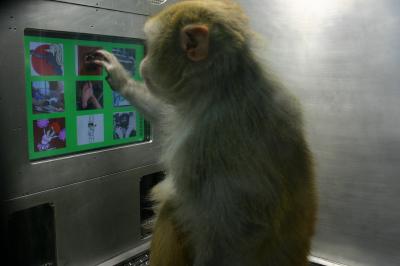
“1. Mirror self-recognition
2. Tests of metacognition;
3. Metacognition of others’ mental states” (Gómez 2009: 45)
Tuesday, January 17, 2012
Animal Cognition & Consciousness (II): Metacognition & Mentalizing
Sunday, January 8, 2012
Animal Cognition & Consciousness (I): Mirror Self-Recognition
“the profound biological continuity between human and nonhuman animals masks an equally profound discontinuity between human and nonhuman minds” (Penn et al. 2008: 109).
Monday, June 15, 2009
Studying the Evolution of Cognition and Language: Are We Wasting Our Time? (Part 1)
This is my penultimate post in my short series on human uniqueness (1, 2, 3).
In a recent article in nature, Johan J. Bolhuis and Clive D. L. Wynne asked “Can evolution explain how minds work?” (subscription needed) and were of the opinion that there are severe problems with comparative paradigms. They pointed out major problems with evolutionary interpretations of cognitive traits. In their view, this research was fraught with anthropocentrism, e.g. it was mostly focused on humans or seen from a human perspective, and it doesn’t take into account the problem of convergent evolution: “Different species may have arrived at similar solutions to cognitive problems because they have experienced similar selection pressures, not because they are closely related. In other words, evolutionary convergence may be more important than common descent in accounting for similar cognitive outcomes in different animal groups” (Bolhuis & Wynne 2009).

In addition, we don’t know which selective pressures our ancestors faced in their environment. Cognitive traits also leave little to no traces in the fossil record. This means that we mainly have to guess which cognitive traits may have evolved in response to some presumed selection pressures.
Bolhuis and Wynne also hold that comparative researchers have “naïve evolutionary presuppositions” and hold that
“As long as researchers focus on identifying human-like behaviour in other animals, the job of classifying the cognition of different species will be forever tied up in thickets of arbitrary nomenclature that will not advance our understanding of the mechanisms of cognition.” (Bolhuis & Wynne 2009).
This argument is of course not new and can be found – in an even stronger form and on a more general level – in the critical writings of Noam Chomsky, Stephen Jay Gould, and maybe most vocally, Richard Lewontin. Lewontin even goes so far as to say that the only thing we know about the evolution of human cognition is precisely that it evolved. That’s it. (Lewontin 1998: 108). This is especially so with complicated cognitive traits like linguistic competence.
We don’t even know in how far language is an innate genetically specified ability and in how far it is only a by-product of other evolutionary changes and is shaped and specified by culture. What’s more, we can’t possibly know how hereditary mechanisms (both genetic and cultural) acted in our remote ancestor, and we don’t know anything about the survival advantage these presumed mechanisms may have had in the past. Lewontin draws the conclusion that “reconstructions of the evolutionary history and the causal mechanisms of linguistic competence […] are nothing more than a mixture of pure speculation and inventive stories.” (Lewontin 1998: 111).
He explicitly directs his criticism at proposals like that of Pinker & Bloom (1990) (see also this post) who argued that natural selection is the only force that can explain the evolution of such a ‘complex adaptive’ trait like language. But we can’t show how natural selection might have been at work in each of the unknown stages that were necessary for language to evolve. Consequently, Pinker & Bloom’s argument is flawed.
I think Lewontin’s argument applies to some of the sweeping ‘adaptationist’ evolutionary approaches to language and cognition. But I don’t think his 1998 critique really captures the state of the research today or even earlier. In the 2003 anthology ‘Language Evolution’ (Kirby & Christiansen 2003, see also this post) which pretty much presented the state of the field there were many researchers who had a substantial amount to say about the evolution of language without falling into the theoretical pitfalls Lewontin warned about. At the end of his article Michael Tomasello, for example, cautions that “I am afraid that I have no real evolutionary fairy tale with which to conclude.” But he still has to clarify what valuable implications his research has for a general account of the evolution of language and cognition and is able to spell out some of the cognitive mechanisms which had to evolve and in how far culture has been an important aspect in this respect (Tomasello 2003: 108f.). Similarly, Marc Hauser and W. Tecumseh Fitch voice similar criticism to that of Lewontin and Chomsky (which is not very surprising given that they co-authored two papers with the latter). However, they hold that the “comparative approach to language has been and will continue to be a powerful approach to understand both the evolution and current function of the language faculty.” (Hauser & Fitch 2003: 159). I completely agree with them, especially if we throw developmental science into the mix. By looking at non-human primates we are able to “isolate and study those components of the language faculty inherited from our non-human ancestors” (Hauser & Fitch 2002: 159). What is more, comparative research can also give us insight into possible advantages and selection pressures that led to the evolution of features. If we find similar traits and neural subsystems in other primates it is reasonable to assume that these are homologous and due to our shared evolutionary history. If on the other hand, other primates don’t have these traits but other species, e.g. songbirds, jays, parrots or deer, have them, they may be analogous and due to similar environmental or social selection pressures. If we carefully compare many different species across different taxa we get an increasingly better picture of the evolution of cognition in humans and other species.
But a broad survey of the field shows that this is already done as Sara Shettleworth (2009a) points out. Consequently, Bolhuis and Wynne’s criticism falls apart if we actually look at the field they are criticising and it is more as if they are flogging a dead horse (2009b). But we can see that Tomasello, Hauser, Fitch, Bolhuis, Wynne and Shettleworth all think that comparative cognition can give us important insights into the evolution of the organisms they study and compare. But it has to be done carefully and critically and within a throroughly worked out theoretical and methodological framework. In light of this, much of Lewontin’s criticisms seem to be misguided or at least do not really apply anymore. But does this really mean that there are no real general problems with evolutionary inquiries into the evolution of cognition?
In my next post I will address the additional criticisms Lewontin launches at the study of the evolution of cognition.
References:
Bolhuis, Johan and Clive D. L. Wynne (2009):Can evolution explain how minds work?' Nature 458: 832–833.
Hauser, M. D. & Fitch, W. T. (2003). What are the uniquely human components of the language faculty? In: Language Evolution: The State of the Art. Ed. by Christensen, M. & S. Kirby) pp. 158-181. Oxford: Oxford Unviersity Press.
Pinker, Steven & Paul Bloom (1990): “Natural Language and Natural Selection.” In: Behavioral and Brain Sciences 13.4: 707-726.
Shettleworth, S. J. (2009a). The evolution of comparative cognition: Is the snark still a boojum? In: Behavioural Processes , 80, 210-217.
Shettleworth, Sara J. (2009b). Cognition: theories of mind in animals and humans. In: Nature 459: 506.
Tomasello, M. (2003). On the different origins of symbols and grammar. In Language Evolution: The State of the Art. Ed by. M. Christiansen & S. Kirby. Oxford: Oxford University Press.
Sunday, May 25, 2008
More on Human and Nonhuman Minds
Now there are some other interesting post on the topic, for example:
- Greg Downey of Neuroanthropology takes a critical look at an New York Times article by Michael Tomasello, co-director of the Max Planck Institute for Evolutionary Anthropology in in Leipzig, Germany, called "How are Humans Unique?"
- Christine Kenneally, author of The First Word: The Search for the Origins of Language, has written a piece for New Scientist called So You Think Humans Are Unique? (you can find a full write-up here)
- Larry Moran of The Sandwalk links to an interesting Symposium called From RNA to Humans: A Symposium on Evolution, including the videos of talks like "Probing Human Brain Evolution at the Genetic Level" by geneticist Bruce Lahn of the Unviersity of Chicago, and "A Neanderthal Perspective on Human Origins" by geneticist Svante Pääbo of the Max Planck Institute for Evolutionary Antrhopology in Leipzig, Germany
- Last but not least, on May 6 and May 8 there was a symposium in New York called "Darwin: 21st-Century Perspectives", where
"Some of the world’s leading Darwin experts discussed the far-reaching legacy of Charles Darwin and the implications of his thinking for science and society today in a special two-part symposium, Darwin: 21st-Century Perspectives, hosted by The New York Botanical Garden and the American Museum of Natural History, which was open to the public."
Their website features high-quality videos and/or mp3s (depends on the talk) of the talks. Hiughlights (in my oppinion) include:
- Michael Ruse, philosopher, Is Darwinism an Exhausted Paradigm? (audio / video)
- Kenneth Miller, biologist, author, and expert court witness, Darwin, God, and Design: America’s New Battle over Evolution (audio)
- Gerald Edelman, biochemist and neurobiologist, Neural Darwinism
I've listened to some podcasts featuring Edelman lately, so I think by now I definitely know Gerald Edelman's favorite facts about the brain:
If you unfolded your cerebral cortex it would be the size of a (large) paper napkin. There would be 30 Billion Neurons and a Million Billion Connections. If you were to count every synaptic connections, counting one connection per second, you were only finished after 32 million years.
Enjoy!
Monday, May 19, 2008
Darwin's Mistake and Darwin's Triumph
After Chris of Mixing Memory and Deric Bownds of Deric Bownds' Mindblog had already drawn attention to the prefinal version of this article, “Darwin’s mistake: Explaining the discontinuity between human and nonhuman minds” by Derek Penn, Keith Holyoak and Daniel Povinelli has now finally been published in the current issue of the Behavioral and Brain Sciences.
Penn, who’s affiliated with the Cognitive Evolution Group at the University of Louisiana, and the University of California, Los Angeles, Holyoak, Professor of Psychology at the University of California, and Povinelli, Professor of Biology at the University of Louisiana, and also a member of the Cognitive Evolution Group, argue that
“Over the last quarter century, the dominant tendency in comparative cognitive psychology has been to emphasize the similarities between human and nonhuman minds and to downplay the differences as “one of degree and not of kind” (Darwin 1871). In the present target article, we argue that Darwin was mistaken: the profound biological continuity between human and nonhuman animals masks an equally profound discontinuity between human and nonhuman minds. To wit, there is a significant discontinuity in the degree to which human and nonhuman animals are able to approximate the higher-order, systematic, relational capabilities of a physical symbol system (PSS) (Newell 1980). We show that this symbolic-relational discontinuity pervades nearly every domain of cognition and runs much deeper than even the spectacular scaffolding provided by language or culture alone can explain. We propose a representational-level specification as to where human and nonhuman animals’ abilities to approximate a PSS are similar and where they differ. We conclude by suggesting that recent symbolic-connectionist models of cognition shed new light on the mechanisms that underlie the gap between human and nonhuman minds.”
As was to expected the article sparked quite a lot of heated responses in the comment section both for it’s title and for its discontinuist view of human cognitive which emphasizes the large gulf that lies between human and nonhuman cognition. Those who are afraid that again a creationist/ID paper has made it into a respectable science journal, can calm down. In their first footnote Penn et al. make clear that:
"All similarities and differences in biology are ultimately a matter of degree. Any apparent discontinuities between living species belie the underlying continuity of the evolutionary process and largely result from the fact that many, and often all, of the intermediate steps are no longer extant. In the present article, our claim that there is a “discontinuity” between human and nonhuman cognition is based on our claim that there is a significant gap between the functional capabilities of the human mind and those of all other extant species on the planet. Our point, to cut to the chase, is that the functional discontinuity between human and nonhuman minds is at least as great as the much more widely acknowledged discontinuity between human and nonhuman forms of communication. But we do not doubt that both evolved through standard evolutionary mechanisms. (Penn et al. 2008: 129)
Interestingly, when you google “Darwin’s mistake” your fist hit is an amazon link for a book called “Darwin's Mistake: Antediluvian Discoveries Prove Dinosaurs and Humans Co-Existed” to which I won’t link because I don’t want to raise the page rank of such junk. The second link is a funny little poem called "Darwin's mistake", which goes like this:
“Three monkeys sat on a coconut tree
Discussing things as they're said to be.
Said one to the others, "Now listen, you two,
There is a certain rumor that can't be true
That man descended from our noble race.
That very idea is a disgrace.
No monkey ever deserted his wife,
Starved her babies or ruined her life.
And another thing you will never see:
A monkey build a fence around a coconut tree
And let the coconuts go to waste
Forbidding all the other monkeys to taste.
If I put a fence around this tree,
Starvation would force you to steal from me.
Here's another thing a monkey won't do:
Go out at night and get on a stew,
And use a gun, or club, or knife
To take some other monkey's life.
Yes, man descended, the ornery cuss -
But, brother, he didn't descend from us.”
I must say this poem is actually pretty funny (given that it's not meant as anti-evolutionary propaganda), although, as primatologists and the Machiavellian intelligence hypothesis tell us, non-human primates surely aren’t saints either.
But Penn et al. make their scientific standpoint absolutely clear with the title of their response, which is called:
“Darwin’s triumph: Explaining the uniqueness of the human mind without a deus ex machina”
I am particularly excited by the comment of Graeme Halford, professor emeritus at the University of Queensland, Australia, and his colleagues, who write that they
“agree with Penn et al. that the ability to recognise structural correspondences between relational representations accounts for many distinctive properties of higher cognition. We propose to take this argument further by defining both a conceptual and a methodological link between animal and human cognition. The conceptual link is to treat relational processing (Halford et al. 1998a) as dynamic bindings of chunks to a coordinate system in working memory (Oberauer et al. 2007). Such a coordinate system consists of slots and relations between them, and includes relational schemas (Halford & Busby 2007)” (Halford et al. 2008: 138)
This of course reminds me of Karl Bühler’s (1934) coordinate system of subjective orientation which I tried to use as a starting point for a cognitive theory which sees mental representations as intersubjectively overlapping and thus shared systemic spaces in the form of a cognitive coordinate system/frame of reference into which and in which conceptual representations are imported, integrated, unified, and blended. In the future, I will have another look at both Penn et al.’s and Graeme Halford’s claims.
Another ‘interesting’ comment is that of R. Allen Gardner, a Professor of Cognitive and Brain Sciences at the University of Nevada, Reno. Here’s the abstract:
“Sound comparative psychology and modern evolutionary and developmental biology emphasize powerful effects of developmental conditions on the expression of genetic endowment. Both demand that evolutionary theorists recognize these effects. Sound comparative psychology also demands experimental procedures that prevent experimenters from shaping the responses of human and nonhuman beings to conform to theoretical expectations.” (Gardner 2008: 135).
What now, you may ask, is ‘interesting’ about this article?. Well let’s take a look at what agrdner had to say about another important Paper on the difference between human and nonhuman cognition, namely Tomasello et al.’s (2005): Understanding and Sharing Intentions: The Origins of Cultural Cognition:
“Sound comparative psychology and modern evolutionary and developmental biology (often called evo-devo) emphasize powerful effects of developmental conditions on the expression of genetic endowment. Both demand that evolutionary theorists recognize these effects. Instead, Tomasello et al. compares studies of normal human children with studies of chimpanzees reared and maintained in cognitively deprived conditions, while ignoring studies of chimpanzees in cognitively appropriate environments.” (Gardner 2005: 699)
To me this sounds a bit like flogging a dead horse, but what do I know. (not much about evo-devo, that’s for sure)
At least both feature this nice photo of the test apparatus for chimpanzee Basso, who first was believed to be able to count but, as was found out in 1917, instead was only reacting to the unconscious cues of the experimenter:
Chris of Mixing Memory, John Wilkins of Evolving Thoughts and George Junior have already posted about the article, I hope there are more to come!
References:
Wednesday, May 7, 2008
Thursday, December 20, 2007
Merry Christmas! (& Memes & Mirror Neurons)
“The human mind is of a very imitative nature”
“At present, we are become an imitative, not to say a mimic, race” (in Gifford’s 1827 introduction to the plays of John Ford).
“the instinct of imitation is implanted in man from childhood, one difference between him and other animals being that he is the most imitative of living creatures, and through imitation learns his earliest lessons;”

Quite astonishingly, Myowa-Yamakoshi et al. (2004) found that chimpanzees who are less than 7 days old are also able to imitate the gestures of tongue protrusion, mouth opening, and lip protrusion.

“like human neonates, chimpanzee neonates are born with the ability to match visually perceived oral gestures with a proprioceptive motor schemes .“ (Myowa-Yamakoshi et al. 2004: 440).
So what about other primates? Previously it was thought that only humans and apes posses these neonatal skills, but it seems that at 3 days of age, rhesus macaques are able to imitate lip smacking and tongue protrusion (Ferrari et al. 2006), facial gestures which later become important in social interaction (Gross 2006)
However, the macaques showed this behavior only a few days after birth and after that it vanished. This may be due the fact that motor as well as cognitive development in macaques is much more rapid in macaques than in the higher apes. It thus seems that the more advanced human imitation capacities built on these imitative foundations that must have been present at the time our lineage split from that of macaques, namely 25 million years ago.
Interestingly, macaques were the first species in which mirror neurons – neurons that fire both during the performance as well as during the observation of an action – were found, and hopefully there will be more studies on the neural basis of imitation in macaques.
Quite Remarkably, adult macaques are also able to notice when someone else is imitating their actions (e.g. a human experimenter), but it is unclear whether they are able to grasp the fact that the experimenter is intentionally imitating them, or if they just recognize it implicitly (Paukner et al. 2005). In the second case, the macaques would just exhibit this knowledge via metacognition, i.e. the awareness of some inner state, something which macaques seem to be able to do.
Evidence for metacognition in macaques comes from research done by H.S. Terrace and his team, who taught their macaques a matching game, and then offered them the options to either play the game and get some food if they won and nothing if they lost, or the option to not play the game and get less food. Interestingly, sometimes the macaques chose the latter, option, and sometimes they chose the former, but if they chose the first option, they performed pretty well, indicating that the macaques had a means of assessing how accurate they were at getting the game right. In another experimental setting, macaques also learned to ask for hints if they otherwise had to solve the problem by trial and error, again indicating that they had some metacognitive means of assessing what they knew and what they didn’t (Kornell et al. 2007).
It is much more questionable if macaques exhibit metarepresentation, i.e. the awareness of mental states of others (Hurford 2007: 35)
This of course taps into the discussion of which primates exhibit a Theory of Mind, or an awareness of the mental states of others, and whether the transition from nonhuman to human minds should be seen as continuous or discontinuous. The two main camps in this debate are that of Povinelli and his colleagues on the one side, who argue that nonhuman primates do not exhibit abstract inferences of others mental states, and that there is a qualitative gap between human and nonhuman cognition (Povinelli & Vonk 2003), and Tomasello and his team on the other side, who argue that chimpanzees are able to understand some psychological states to a certain degree, and that human cognition should be seen as much more continuous (Tomasello et al. 2003). It seems as if Povinelli and his colleagues are just about to launch their next major attack (to be publish in the journal Behavioral and Brain Sciences in 2008) awe-inspiringly called “Darwin’s mistake: Explaining the discontinuity between human and nonhuman minds” . As BBS consists of the target article along with 25 or so commentaries other researchers, I’m really interested in how this will turn out.
Whereas Tomasello et al. (2003) claim that:
“At issue is no less than the nature of human cognitive uniqueness” (Tomasello et al. 2003: 156)Povinelli et al. take a much more relaxed stance:
"the idea that theory of mind is the ‘holy grail’ of comparative cognition needs to be abandoned. Neither chimpanzees nor evolutionary theory will be insulted if the very idea of ‘mental states’ turns out to be an oddity of our species’ way of understanding the social world.“ (Povinelli et al. 160)Dang, I still haven’t posted about either the Lyons et al. (2007) paper or the genetic differences between humans and chimpanzees. But I will do so next year. Promise. Cross my Heart and Hope to Die. As an apology, here’s a link to a great song by Jonathan Coulton, performed live in front of an audience of (judging by the chorus) zombies. Gotta love that.
So merry Christmas & Happy New Year, and see you in 2008.
Thursday, December 13, 2007
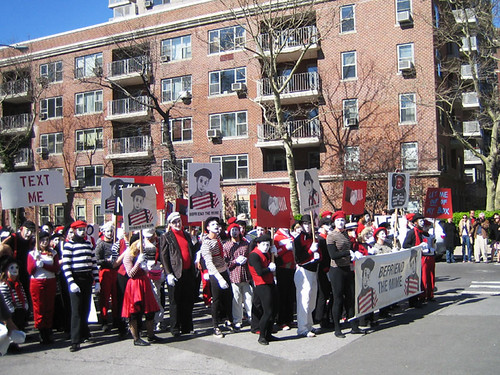
Well, Mimes Still Suck

So in my last post I wrote about the importance of vocal imitation for the evolution of language. According to Hauser et al. (2002), it is one of the most important species-specific, but not language-specific components that make up the faculty of language in the broad sense (FLB), as opposed to the faculty of language in the narrow sense, (FLN), which they equate with the
"core computational mechanisms of recursion as they appear in narrow syntax and the mappings to the interfaces [of the conceptual-intentional system (e.g. vocal imitation, sound-pattern discrimination, language perception and production, etc.) and the sensory-motor system(e.g. Theory of Mind, nonlinguistic conceptual representations, voluntary control over signal production, etc.) - and whatever you think should be seen as a part of it, Hauser et al. don't care]" (Hauser et al. 2002: 1573)Whatever that is supposed to mean.
Hauser et al. also list
"Imitation as a rational, intentional system" (Hauser et al. 2002: 1573)as a component of the conceptual-intentional system, and cite
"Comparative studies of chimpanzees and human infants suggesting that only the latter read intentionality into action, and thus extract unobserved rational intent" (Hauser et al. 2002: 1573).This remark touches upon the messy theory of mind debate in the cognitive sciences and elsewhere. Hauser et al. seem to assume that there is an intrinsic link between some forms of imitation and the attribution of intent to the other. They report that chimpanzees seem to have only minimal visual-imitative capacities, and that there is almost no evidence for them in monkeys (Hauser et al. 2002: 1575). According to Hauser et al. this seems to confirm that non-human apes and monkeys are not able to attribute intentions to others.
However, it seems that chimpanzees at reading others behavioral programs, and predicting their future actions without needing to attribute mental states to con-specifics. (Byrne and Russon 1998) In general, just as language is not a monolithic whole, imitation probably is also a cognitive capacity consisting of various component parts. Byrne and Russon (1998) propose that Imitation is in fact a task that is hierarchically divided in separate forms of imitation, that isAccording to Byrne and Russon (1998), all great apes are able to imitate behavior at the second level, and the use of "action level" imitation is primarily restricted to humans (although they speculate that in non-human great apes, this may be more a matter of motivation than ability), but only plays a minor role, because even such complex skills as the learning of language (e.g. sound production) are achieved on the program level because they do not actually imitate the physical sounds but the organizational structure of the sound system. However, they don't really come up with a good explanation why action level imitation exists in humans at all, and even doubt that it plays an important or even frequent role at all.
- Imitation as Goal Imitation (i.e. achieve the same result, e.g. eating a fruit, possibly in a roughly similar as someone before you).
- Imitation at the Program Level (i.e. simulate the actions at a broad behavioral level, representing the organizational structure of an action, without imitating it in detail)
- Impersonation, or "True Imitation" (i.e. simulate the other's motoric actions in detail)
As Tomasello (1998) rightly criticizes, this largely downplays the role of shared human cultural and cognitive artifacts and the creative use to which they can put in order to facilitate new functional dimensions and therefore progress, and fails to explain what it is that is special about humans, and why cultural transmission in humans is so much more powerful than in other apes.
They also greatly underestimate the importance of the arbitrary, conventionalized nature of the (Saussurean) linguistic sign, which is crucial for the establishment of a successfully communicating group of agents (Which is also why my blog's title alludes to this principle. I'll come back to this in a subsequent post)
I think it is interesting to contrast Byrne and Russon's model with evidence of so-called conformity bias in chimpanzees.
Whiten et al. (2005) taught two distinct tool-use techniques to two high-ranking female chimpanzees, and then brought them back to their groups. 30 of 32 chimpanzees adopted the female chimpanzees technique. Some chimpanzee at first discovered different means of tool-use, which could be explained in terms of broad organizational imitation, but later also adopted the predominating technique of their group, even if they were able to use both techniques and both very equally successful. If chimpanzees would act only at a broad behavioral level, then this effect surely wouldn’t have occurred. Thus, there is evidence that even in chimpanzees there is the convergence of complex behavioral patterns (we could even call them ‘memes’ if we felt like it) to a cultural norm. Thus, such tendencies must have a deeper evolutionary heritage than assumed before.
Furthermore, Byrne and Russon write that"We suspect, however, that action level imitation is less common in children than it seems, and that, often, children’s “imitation” may reflect response facilitation." (Byrne and Russon 1998: 683)"This, however, is clearly refuted by experiments done by Lyons et al. (2007), which I will describe in my next post. (In the meantime, however, you should rather go read Carl Zimmer's heartening and much more enjoyable blog post and article in the New York Times about the fate of his daughter in comparative tests between human children and chimpanzees. )
Without question, Byrne and Russon's model is not able to give a complete theory of imitation, which is why I will look at some other approaches in my next post
References:
Byrne, Richard W and Anne E. Russon. 1998. “Learning by Imitation: a Hierarchical Approach.” Behavioral and Brain Sciences 21.5: 667-684
Hauser, Marc D., Noam Chomsky and W. Tecumseh Fitch 2002. “The Faculty of Language: What Is It, Who Has It, and How Did It Evolve?” Science 298: 1569-1579.
Lyons, Derek E.. Andrew G. Young, and Frank C. Keil. 2007. “The Hidden Structure of Overimitation” PNAS 105.50: 19751–19756.
Tomasello, Michael. 1998. “Emulation learning and cultural learning.” Behavioral and Brain Sciences 21.5: 703-704.
Whiten, Andrew, Victoria Horner & Frans B. M. de Waal. 2005. “Conformity to Cultural Norms of Tool Use in Chimpanzees.” Nature 437: 737-740.
Monday, December 10, 2007
Oh, I Forgot Something
These considerations are of course not exactly new. as early as in 1589, for example, George Puttenham wrote in his Arte of English Poesie that:
“Speach is not naturall to man sauing for his onely habilitie to speake, and that he is by kinde apt to vtter all his conceits with sounds and voyces diuersified many maner of wayes, by meanes of the many & fit instruments he hath by nature to that purpose, as a broad and voluble tong, thinne and mouable lippes, teeth euen and not shagged, thick ranged, a round vaulted pallate, and a long throte, besides and excellent capacitie of wit that maketh him more disciplinable and imitatiue then any other creature […].”I will stick with this example because language evolution is this blog’s main topic.
What I find interesting in this paragraph is that Puttenham actually directs attention to a lot of physiological features that are acknowledged by modern linguists and phoneticians to be crucial for the production of speech. As Jean Aitchision puts it, we are “The Articulate Mammal” (1998), and many of her observations actually concur with that of Puttenham.
Just as he does she stresses the difference between the long thin tongues of monkey and the muscular, thick and mobile tongues of humans, which allows them to vary the size of the oral cavity, and thus allows the pronunciation of a great range of vowels.
She also stresses the fact that the muscles in the lips of humans are more intricately interlaced and more developed than the muscles in the lips of other primates. Aitchision also observes that the regularity of human teeth is not needed for eating but probably for articulatory purposes. (Aitchison 1998: 48f., Lieberman 2007: 40-47 , Fitch 2005: 198f.)
I doubt that Puttenham was the first to notice the importance of the specially structured and descended larynx of humans for speech, but he definitely wasn’t the last. Whereas in most mammals, simultaneous breathing and swallowing is possible, humans (or at least those who aren’t babies anymore), don’t posses this ability because their larynx lies too low to be engaged into the nasal passages. (Fitch 2000: 260)
This anatomical change expands the vocal repertoire of humans significantly and can be seen as “a key innovation in the evolution of speech” (Fitch 2000: 261) because it enabled us to form highly discriminable different phonetic sounds (“formant patterns”) (Fitch 2000:261),
However, it has lately been discovered that animals exhibit a remarkable plasticity in regards to the lowering of the larynx during vocalization (for a example, a dog bark) Furthermore, the descension of the larynx doesn’t seem to be unique to humans, and is also found in lions, koalas, and deer. (Fitch 2005: 199).
This has led some researchers, such as Tecumseh Fitch, to suggest that this shared property is an instance of convergent evolution and thus evolved for a different purpose than speech production, namely size exaggeration, the function the descension of the larynx fulfills, for example, in deer (Fitch and Reby 2001, Fitch 2005).
In this view, the descension of the larynx was prior to speech and was only later co-opted for language. The first fully modern human speech anatomy is dated to 50,000 years ago, and is missing in earlier humans as well as Neanderthals. (Lieberman 2007). This still fits with the a scenario in which the speech tract was only later adapted and further shaped for language, and it definitely shows that language/speech is a driving force in human evolution, given the long evolutionary trajectory it has had.
But what then, is special to speech? Again it seems that Puttenham was on the right track. Hauser et al. (2002), for example, also stress the importance of vocal imitation in language learning and production. Whereas dolphins, whales, seals, songbirds, parrots, hummingbirds and some other species seem to share humans’ aptness regarding vocal imitation, it seems that in other primates this trait is either absent or only exists in a rather rudimental form (Hauser et al. 2002, Fitch 2000, Fitch 2005).
This is supported for example by evidence from cross-fostered Japanese/rhesus macaques. Although both species have a very similar social structure, their vocalizations are quite different in some context. Whereas juvenile Japanese macaques give clear cooing sounds when playing, rhesus macaques give gruffy grunts in the same situation. Did the Japanese macaques growing up in the Rhesus macaque adopt the vocalizations of their foster species? What about the Rhesus macaques growing up among Japanese Macaques?
Interestingly, although they are in fact able to produce such sounds (and do so in other contexts), the Japanese Macaque splaying with Rhesus macaques gave coos whereas their playmates gave gruffs. The same lack of vocal adaptation could be seen in the cross-fostered rhesus macaques. Certain calls in the macaques seem to be genetically bound to specific contexts(Cheney & Seyfarth 2007: 225, Owren et al. 1993), something which clearly isn’t the case with humans (otherwise there wouldn’t be 250 different languages spoken alone in Brooklyn, for example).
So the case Hauser et al. make for vocal imitation seems quite a strong one. Yet, as they themselves acknowledge, the question what vocal imitation evolved for is still hotly debated. There is still further evidence that supports the notion that vocal imitation is a more crucial component that led to human language than mere voluntary vocal control per se.
As we have seen, in some situations primate and generally animal signaling is closely bound to specific contexts. However, there are other situations where call production is much more plastic and seems to be much more under voluntary control.
One example is a study by Hihara et al. (2003), in which they trained macaques to use a rake in order to retrieve food, and subsequently brought them to either request the food directly, or request the rake, via cooing (Something the monkey is probably inclined to utter naturally in the context of food.) Astonishingly, the monkeys came up with two distinct calls all on their own, one for requesting the rake, the other for requesting for food (Cheney & Seyfarth 2007: 227, Hihara et al. 2003).
An even more intriguing example of signal transformation (albeit not in the auditory modality), called schematization of action, is the following: (Which I took from Hurford 2007, who took it from Gomez 2005 – yeah, recursion rocks!)
“Thorndike (1898) found that cats that were released from a puzzle-box upon performance of an arbitrarily chosen action (e.g., licking their paw), instead of by the accidental activation of the releasing device, tended to develop an abridged, sketched-out version of the relevant behaviour — something like a “gesture” of paw-licking“ (Gomez 2005: 93, Hurford 2007: 199,)Of course, Puttenham wasn’t only referring to vocal imitation. In fact, things lie a bit differently when we speak about general imitation, and I’ll discuss some of the evidence on human vs. non-human imitation in my next post.
References:
Aitchison, Jean. 1998. The Articulate Mammal. An Introduction toPsycholinguistics. London / New York: Routledge.
Cheney, Dorothy L. and Robert M. Seyfarth. 2007. Baboon Metaphysics: The Evolution of a Social Mind. University of Chicago Press, Chicago
Fitch W. Tecumseh. 2000. The evolution of speech: a comparative review. Trends in Cognitive Sciences. 4: 258 – 267.
Fitch, W. Tecumseh. 2005. “The Evolution of Language: A Comparative Review” P Biology and Philosophy 20: 193–230
Fitch, W. Tcusmeh and David Reby. 2001. “The descended larynx is not uniquely human.” Proclamations of the Royal Society B: Bioliogical Sciences 268: 1669 – 1675.
Gómez, Juan Carlos. 2005. “Requesting gestures in captive monkeys and apes: Conditioned responses or referential behaviours?“ Gesture 5.1/2: 91-105.
Hauser, Marc D., Noam Chomsky and W. Tecumseh Fitch 2002. “The Faculty of Language: What Is It, Who Has It, and How Did It Evolve?” In: Science 298, 1569-1579
Hihara, Sayaka, HirokoYamada, Atsushi Iriki, and Kazuo Okanoya. 2003. “Spontaneous vocal differentiation of coo-calls for tools and food in Japanese monkeys” Neuroscience Research 45.4
Hurford, James M. 2007. The Origins of Meaning: Language in the Light of Evolution. Oxford: OUP.
Lieberman, Phillip. 2007. “The Evolution of Speech: Its Anatomical and Neural Bases.” Current Anthropology 48.1: 39-66.
Owren MJ, Dieter JA, Seyfarth RM, Cheney DL.. 1993 “Vocalizations of rhesus (Macaca mulatta) and Japanese (M. fuscata) macaques cross-fostered between species show evidence of only limited modification “ Developmental Psychobiology 26.7: 389-406.
Thorndike, Edward L. 1898. “Animal intelligence: An experimental study of the associative processes in animals.” Psychological Review: Series of Monograph Supplements, 2.4: 1-109.
Monday, December 3, 2007
A Zombie’s Inquiry Into the Evolution of his Most Favorite Meal III: What are Humans Good at?
A while back Juan Uarigerika wrote an article in Seed magazine about language evolution. In it he proposed that maybe language is responsible for most of our especially human intelligence, as well as precursor for our more advanced sensorimotor capacities, and that in the end it could turn out that research into our cognitive architecture would come up with the formula ‘Finch + Chimp = Human.’ Uarigerika’s article is written, for a magazine, so it’s clear that he doesn’t really do much in order of presenting evidence and arguments in a really ‘scientific’ way but rather presents his ideas in a in a popular style, but still I think his proposal is quite problematic (Mark Liberman has written a nice rebuttal of Uarigerika’s reductionsit view over at Language Log)

moar funny pictures
A better way to study the differences between human and animal cognition effectively is to compare differences and similarities of certain cognitive traits and analyze how these may come about and how the cognitive function in question is enabled in the given organism.
In a massive comparative study, Hermann et al. (2007) had Chimpanzees, Orangutans and 2.5 year-old children perform various task and then evaluated and compared the species’ qualitatively differing performances. The tasks were divided into two “domains”, physical and social, each consisting of three “scales” (physical: space, quantitiy, causality; social: social learning, communication, theory of mind). Among the 20 tasks there were such things as “using a stick in order to retrieve a reward which is out of reach.” (causality), “Locating a reward.“ (space), “Solving a simple but not obvious problem by observing a demonstrated solution” (social learning), “Following an actor’s gaze direction to a target” or “Understanding what an actor intended to do (unsuccessfully” (both Theory of Mind).
On average, the results of humans and chimpanzees were very similar in the physical domain, and scored much higher than the orangutans. In the social domain, however, humans outperformed chimpanzees and orangutans by far. The non-human apes were right only half as often as the human children. This means that chimpanzees outcompete orangutans when it comes to things as causal reasoning and quantities, but are equally bad at imitating others or assessing their intentions. Whereas in the physical tasks chimps sometimes performed better than humans (e.g. Tracking of a reward after location changes or Using a stick in order to retrieve a reward which is out of reach, something where human children performed much worse than both chimps and orangutans), interestingly
“Children were better than both ape species at the three causality tasks in which a judgment must be made before manipulation or choice, whereas chimpanzees were better than children and orangutans at the one causality task involving active tool use.” (Hermann et al. 2007:1362)
“the current results provide strong support for the cultural intelligence hypothesis that human beings have evolved some specialized social-cognitive skills (beyond those of primates in general) for living and exchanging knowledge in cultural groups: communicating with others, learning from others, and “reading the mind” of others in especially complex ways“ (Hermann et al. 2007: 1365).But they caution against the conclusion that social intelligence as a whole, or a “Theory of Mind-module” is the distinctive property separating humans, chimps and orangutans. Instead, taking into account that human children were better than chimps in causality tasks that didn’t include the active manipulation of tools, they speculate that
“what may be distinctive is the ability to understand unobserved causal forces in general, including (as a special case) the mental states of others as causes of behavior. Even in this case, however, it is a plausible hypothesis that understanding hidden causal forces evolved first to enable humans to understand the mental states of other persons, and this generalized only later to the physical domain.”Which fits well with the evidence that humans are especially good at displaced mental and conceptual simulation (Miller et al. 2002, Barsalou 2005) and such things as mental time travel (Gilbert & Wilson 2007).
In my next post I will expand a bit on complementary approaches to comparing human and other non-human primate cognition and differences in general.
References:
Barsalou, Lawrence W. 2005. “Continuity of the conceptual system across species.” Trends. Cog. Sc. 9.7: 309-311.
Gilbert, Daniel T. and Timothy D. Wilson. 2007. “Prospection: Experiencing the Future.” Science 317: 1351-1354.
Hermann, Esther Josep Call, María Victoria Hernández-Lloreda, Brian Hare, and Michael Tomasello. 2007. “Humans Have Evolved Specialized Skills of Social Cognition: The Cultural Intelligence Hypothesis” Science 317: 1360-1366.
Miller, Earl K., David J. Freedman and Jonathan D. Wallis 2002. “The Prefrontal Cortex: Categories, Concepts and Cognition.” In: Phil. Trans. R. Soc. Lond. B 357: 1123–1136
Monday, November 19, 2007
Evolutionary Metaphysics V
As a starter, our LCAs with chimpanzees should have exhibited or later evolved the following traits:
1 A rudimentary Theory-of-Mind and a conceptual system which enabled them to form multimodal mental-representations had to be present (Cheney & Seyfarth 2007, Barsalou 2005, Gil-da-Costa et al. 2004)
2a enhanced displaced conceptual control somehow evolved, probably due to prefrontal enlargement, resulting in higher frontal control over neural processes (Barsalou 2005, Deacon 1998, Miller et al. 2002, Rilling 2006)
2b enhanced ToM-abilities, probably influenced by greater frontal control, but also due to some elaboration of an existing mirror neuron system (which is present, for example in maqaques) which then was integrated into a higher order system together with cortical midline structures responsible for social and self-evaluation and possibly other information structures, forming the ‘social network.’ (Cheney & Seyfarth 2007, Uddin et al. 2007, Wheatley et al. 2007, Barsalou in press a, Rizzolatti & Craighero 2004)
3. Greater social and cultural complexity paired with the motivation to cooperate and share mental states with others (Tomasello et al. 2005, Herrmann et al. 2007), possibly co evolutionary influences of social complexity, theory of mind (Dunbar 1998, Dunbar & Shultz 2007) as well as technological advances (Reader and Laland 2002, Reader 2003) and brain expansion.
4. higher ability of displaced, goal-directed an planning simulation of physical categories (physical stance, folk physics) functional categories (design stance, folk biology, mechanics) and intentional categories (intentional stance, folk psychology, ToM) aiding survival and reproductive success trough comprehensive prediction in dangerous environments and socially complex groups (Dennett 1987, Poirier et al. 2005, Tooby & DeVore 1987, Ryder & Favorov 2001)
5. Evolution of extensive symbolic capacities and ‘protolanguage’(which I haven’t addressed here) aided among other factors by displaced frontal control and other selective pressures such as the need to communicate displaced information, share intentions and cooperate, foraging, competition, sexual selection such as display of genetic fitness, establishment of trust, etc. etc. (Deacon 1998, Bickerton 2006, Jackendoff 2002, Pinker 1994, Tomasello et al. 2005, Desalles 2007, Franks and Rigby 2002).
6. Further enhancement of symbol-usage through interactions between language and embodied simulation and ‘symbolic theft’ (embodied-experience to language mapping) (Barsalou in press b, Cangelosi et al. 2002)
7. Evolutionary/cultural feedbacks from language to the conceptual system (Lupyan 2006, Burling 2005, Barsalou 2005, in press a) and further influence of metaphorical structure to language (Lakoff and Johnson, 1987, 1999). The ability to blend mental spaces together and form what-if structures and envision technological/cultural innovations, and goal-directed actions (Turner 2003, Miller et al. 2002,Cheney and Seyfarth 2007) Cheney & Seyfarth write that if you search for what-if on Google you’ll get about 150,000,000 hits, which as they say, might be too much of a good thing.
Oh yeah, and mirror neurons also possibly played a rule in language evolution (Arbib 2005). And I didn’t say anything about syntactic/grammatical evolution (Jackendoff 2002) And I forgot recursion (Hauser et al. 2002) as well. And as almost everyone else I’m sure the Baldwin Effect has something important to do with language evolution (Jackendoff 2002, Kirby 2000). Neither did I address the fact that… oh well, as you see, language evolution is a pretty darn complex interdisciplinary field, but I think I pinpointed some of the (if not all) key issues critical for the evolution of language and the human mind. Hope you enjoyed my digressions inspired by Cheney and Seyfarth’s book. Cheers.
References:
Arbib, Michael A. 2005. “From monkey-like action recognition to human language: An evolutionary framework for neurolinguistics.” Behavioral and Brain Sciences 28: 105-167
Barsalou, Lawrence W. 2005. “Continuity of the conceptual system across species.” Trends. Cog. Sc. 9.7: 309-311.
Barsalou, Lawrence W. In press. “Grounded Cognition.” In: Annual Review of Psychology 59
Barsalou, Lawrence W. in press b. “Grounding symbolic operations in the brain’s modal systems.” Embodied grounding: Social, cognitive, affective, and neuroscientific approaches. Eds. G.R. Semin & E.R. Smith. New York: Cambridge University Press.
Bickerton, Derek. 2006. “Language Evolution”
Burling, Robbins. 2005. The Talking Ape. Oxford: OUP
Cangelosi, A., Greco, A., & Harnad, S. 2002. “Symbol Grounding and the Symbolic Theft Hypothesis”. Simulating the Evolution of Language. Eds. A.Cangelosi & D. Parisi . London: Springer
Cheney, Dorothy L. and Robert M. Seyfarth. 2007. Baboon Metaphysics: The Evolution of a Social Mind. Chicago: University of Chicago Press.
Deacon, Terrence William 1998. The Symbolic Species: The Co-evolution of Language and the Brain. New York / London: W.W. Norton.
Dennett, Daniel C. 1987. The Intentional Stance. Cambridge, M.A.: Bradford Books.
Desalles, Jean-Louis. 2007. Why We Talk. Oxford: OUP.
Dunbar, Robin 1998. “Theory of Mind and the Evolution of Language.” In: James
R. Hurford, Michael Studdert-Kennedy and Chris Knight (eds.). Approaches to the Evolution of Language. Social and Cognitive Bases. Cambridge: Cambridge University Press
Dunbar, R. I. M. and Susanne Shultz. 2007.“Evolution in the Social Brain” Science 317: 1344-1347
Gil-da-Costa, Ricardo, Allen Braun, Marco Lopes, Marc D. Hauser, Richard E. Carson, Peter Herscovitch and Alex Martin. 2004. “Toward an evolutionary perspective on conceptual representation: Species-specific calls activate visual and affective processing systems in the macaque.” PNAS 101.50: 17516–17521.
Hauser, Marc D., Noam Chomsky and W. Tecumseh Fitch 2002. “The Faculty ofLanguage: What Is It, Who Has It, and How Did It Evolve?” In: Science 298, 1569-1579.
Herrmann, Esther, Josep Call, María Victoria Hernández-Lloreda, Brian Hare, and Michael Tomasello. 2007. “Humans Have Evolved Specialized Skills of Social Cognition: The Cultural Intelligence Hypothesis.” Science 317: 1360-1365.
Jackendoff, Ray. 2002.. Foundations of language: brain, meaning, grammar, evolution. Oxford: Oxford University Press.
Kirby, Simon 1998. “Fitness and the Selective Adaptation of Language.” In: James R. Hurford, Michael Studdert-Kennedy and Chris Knight (eds.). Approaches to the Evolution of Language. Social and Cognitive Bases. Cambridge: Cambridge University Press, 359-383.
Lakoff, George, and Mark Johnson 1980. Metaphors we live by. Chicago: University of Chicago Press.
Lakoff, George and Mark Johnson. 1999. Philosophy in the Flesh: The Embodied Mind and its Challenge to Western Thought. New York: Basic Book
Lupyan, Gary. 2006. “Labels Facilitate Learning of Novel Categories.” The Evolution of Language: Proceedings of the 6th International Conference. Eds. A. Cangelosi, A.D.M. Smith & K.R. Smith Singapore: World Scientific,190-197
Miller, Earl K., David J. Freedman and Jonathan D. Wallis 2002. “The Prefrontal Cortex: Categories, Concepts and Cognition.” In: Phil. Trans. R. Soc. Lond. B 357: 1123–1136
Poirier, Pierre, Benoit Hardy-Vallée and Jean-Frédéric Depasquale.2005. “Embodied Categorization.” Handbook of Categorization in Cognitive Science. Eds. Henri Cohen and Claire Lefebvre. Amsterdam: Elsevier, 2005.
Pinker, Steven 1994. The Language Instinct: The New Science of Language and Mind. London: Lane Penguin Press.
Reader, S.M. 2003. “Relative brain size and the distribution of innovation and social learning across the nonhuman primates.” The Biology of Traditions: Models and Evidence. Eds. D.M. Fragaszy and S. Perry, 56-93.
Reader, S.M. and K.N. Laland. 2002. “Social Intelligence, innovation, and enhanced brain size in primates” PNAS 99: 4436-4441.
Rilling, James K. 2006. Human and NonHuman Primate Brains: Are They Allometrically Scaled Versions of the Same Design? Evolutionary Anthropology 15: 67-77.
Ryder, Dan and Oleg V. Favorov. 2001. “The New Associationism: A Neural Explanation for the Predictive Powers of Cerebral Cortex.” Brain and Mind 2.2. 161-194.
Tomasello, Michael, Malinda Carpenter, Josep Call, Tanya Behne, and Henrike Moll. 2004. “Understanding and Sharing Intentions: The Origins of Cultural Cognition.” Behavioral and Brain Sciences 28.4
Tooby, John and Irven DeVore 1987. “The Reconstruction of Hominid Rvolution Through Strategic Modelling.” The Evolution of Human Behavior: Primate Models. Ed. W.G. Kinzey. Albany: SUNY.
Turner, Mark. 2003. “Double-Scope Stories.” Narrative Theory and the Cognitive Sciences. Ed. David Herman
Rizzolatti, Giacomo and Laila Craighero. “The Mirror-Neuron System.” Annual Review of Neuroscience 27 (2004): 169–192.
Uddin, Lucina Q., Marco Iacoboni, Claudia Lange and Julian Paul Keenan. 2007.“The Self and Social Cognition: The Role of Cortical Midline Structures and Mirror Neurons.” Trends in Cognitive Sciences 11.4 53-157.
Wheatley, Thalia, Shawn C. Milleville and Alex Martin. “Understanding Animate Agents: Distinct Roles for the Social Network and Mirror System.” Psychological Science 18.6 (2007): 469-474.