Tuesday, October 26, 2010

Did neural reuse play a role in language evolution?

There's an interesting article in the new of the Behavioral and Brain Sciences along with a number of equally interesting commentaries:


An emerging class of theories concerning the functional structure of the brain takes the reuse of neural circuitry for various cognitive purposes to be a central organizational principle. According to these theories, it is quite common for neural circuits established for one purpose to be exapted (exploited, recycled, redeployed) during evolution or normal development, and be put to different uses, often without losing their original functions. Neural reuse theories thus differ from the usual understanding of the role of neural plasticity (which is, after all, a kind of reuse) in brain organization along the following lines: According to neural reuse, circuits can continue to acquire new uses after an initial or original function is established; the acquisition of new uses need not involve unusual circumstances such as injury or loss of established function; and the acquisition of a new use need not involve (much) local change to circuit structure (e.g., it might involve only the establishment of functional connections to new neural partners). Thus, neural reuse theories offer a distinct perspective on several topics of general interest, such as: the evolution and development of the brain, including (for instance) the evolutionary-developmental pathway supporting primate tool use and human language [-my emphasis, M.P.]; the degree of modularity in brain organization; the degree of localization of cognitive function; and the cortical parcellation problem and the prospects (and proper methods to employ) for function to structure mapping. The idea also has some practical implications in the areas of rehabilitative medicine and machine interface design.
I think stressing the importance of things like neural reuse and recruitment also fits in nicely with a recent post over at Replicated Typo about the role of "Domain-General Regions and Domain-Specific Networks" in the evolution of language, where Wintz proposes a rough outline of a possible evolutionary scenario for the emergence of language:
  1. Relaxed selection allowed developmental processes to open up new levels of functional complexity;
  2. This functional complexity was achieved through allowing additional neural systems to influence a specific type of behaviour;
  3. With these new possibilities now unmasked, natural selection then operated on maintaining this functional complexity by preparing individuals for linguistic input;
  4. One suggestion for how this might be achieved is through selection for neural circuitry that aids in creating the networks that subserve language processing;
  5. So instead of having domain-specific modules, humans have domain-general modules that are networked in a domain-specific manner.
  6. Rapidly acquired, and seemingly ubiquitous, features across languages are therefore more likely to have been the product of cultural evolutionary processes that enable a language to adapt to various constraints, including: domain-general mechanisms, the transmission vector, demography, the environment etc.

Saturday, October 23, 2010

New Issue of Trends in Cognitive Sciences: relational knowledge and killjoy explanations in comparative psychology

The lates issue of Trends in Cognitive Sciences has just been published. Two of the articles look escpecially interesting:

From the process of organic evolution to the analysis of insect societies as self-organizing systems, biology is full of awe-inspiring examples of complexity arising from simplicity. Yet in the contemporary study of animal cognition, demonstrations that complex human-like behavior arises from simple mechanisms rather than from ‘higher’ processes, such as insight or theory of mind, are often seen as uninteresting and ‘killjoy’, almost a denial of mental continuity between other species and humans. At the same time, however, research elsewhere in psychology increasingly reveals an unexpected role in human behavior for simple, unconscious and sometimes irrational processes shared by other animals. Greater appreciation of such mechanisms in nonhuman species would contribute to a deeper, more truly comparative psychology.
Accumulating evidence on the nature, function and acquisition of relational knowledge indicates a crucial role of such knowledge in higher cognitive processes. In this review, we specify the essential properties of relational knowledge, together with the role it plays in reasoning, categorisation, planning, quantification and language. Furthermore, we discuss the processes involved in its acquisition and how these processes have been implemented in contemporary neural network models. We present evidence demonstrating that relational knowledge integrates heuristic and analytic cognition, is important for symbolic processes and the creation of novelty, activates specific regions of the prefrontal cortex, and is the most recently evolved and slowest-developing cognitive process. Arguably, relational knowledge represents the core of higher cognition.

Saturday, October 16, 2010

30th Anniversary Perspectives on Cognitive Science

The lates two issues of the journal Topics in Cognitive Science feature a very interesting collection of reviews that cover
"disciplines and perspectives that have been central to Cognitive Science for the past 30 years and that are likely to be central for the next 30 years and beyond."
(see here and here, subscription required)

To further quote the introduction by Lawrence W. Barsalou,
"the disciplines (and the authors addressing them) include the following:

"Psychology (Dedre Gentner)

Artificial Intelligence (Kenneth D. Forbus)

Philosophy (William Bechtel)

Linguistics (Elissa L. Newport)

Anthropology (Andrea Bender, Edwin Hutchins, and Douglas L. Medin)

Education (Susan Chipman)

Neuroscience (Rick Cooper and Tim Shallice)

Primate Cognition (Amanda Seed and Michael Tomasello)

The theoretical perspectives (and the authors addressing them) include the following:

Cognitive Architectures (Neils Taatgen and John R. Anderson)

Emergentist Approaches (James L. McClelland)

Formal Modeling (Richard Shiffrin)

Developmental Systems (Linda B. Smith)

Cognitive Ecology (Edwin Hutchins)

Grounded Cognition (Lawrence W. Barsalou)"
The article by Lawrence Barsalou on 'Grounded Cognition' in particular looks very interesting to me (pre-final draft can be found here). Here's the abstract:
"Thirty years ago, grounded cognition had roots in philosophy, perception, cognitive linguistics, psycholinguistics, cognitive psychology, and cognitive neuropsychology. During the next 20 years, grounded cognition continued developing in these areas, and it also took new forms in robotics, cognitive ecology, cognitive neuroscience, and developmental psychology. In the past 10 years, research on grounded cognition has grown rapidly, especially in cognitive neuroscience, social neuroscience, cognitive psychology, social psychology, and developmental psychology. Currently, grounded cognition appears to be achieving increased acceptance throughout cognitive science, shifting from relatively minor status to increasing importance. Nevertheless, researchers wonder whether grounded mechanisms lie at the heart of the cognitive system or are peripheral to classic symbolic mechanisms. Although grounded cognition is currently dominated by demonstration experiments in the absence of well-developed theories, the area is likely to become increasingly theory driven over the next 30 years. Another likely development is the increased incorporation of grounding mechanisms into cognitive architectures and into accounts of classic cognitive phenomena. As this incorporation occurs, much functionality of these architectures and phenomena is likely to remain, along with many original mechanisms. Future theories of grounded cognition are likely to be heavily influenced by both cognitive neuroscience and social neuroscience, and also by developmental science and robotics. Aspects from the three major perspectives in cognitive science—classic symbolic architectures, statistical/dynamical systems, and grounded cognition—will probably be integrated increasingly in future theories, each capturing indispensable aspects of intelligence."

Friday, September 3, 2010

Is 'Shared Intentionality' the Foundation of Human Uniqueness?


Wow, I can't believe that it's been two months since I last posted anything. But I'm still working on my last term papers and preparing for writing my state examination thesis (similar to a master's thesis), so I rarely find any time to blog.
But I've been meaning to repost a blog post I wrote over at replicated typo - where I've become a contributor - about the concept of "shared intentionality" (see e.g. Tomasello & Carpenter 2007). So here it is:

Shared or collective intentionality is the ability and motivation to engage with others in collaborative, co-operative activities with joint goals and intentions. (Tomasello et al. 2005). The term also implies that the collaborators’ psychological processes are jointly directed at something and take place within a joint attentional frame (Hurford 2007: 320, Tomasello et al. 2005).


Michael Tomasello and his colleagues at the Max-Planck-Institute for Evolutionary Anthropology in Leipzig, Germany have proposed that shared intentionality and the cognitive infrastructure supporting it may be the crucial feature that makes humans unique.

(You can hear Michael Tomasello talk about shared intentionality in his brief 2009 acceptance speech for the prestigeous "Hegel-Price" here. Transcript here)

Understanding Pointing

The infrastructure of this capacity requires abilities that are present in humans at a surprisingly young age. Although human children only know what other can see and what the cannot see at 24 months of age (Moll & Tomasello 2006). other social cognitive skills appear at a much earlier date. (Chimpanzees, interestingly, appear to only know what another one sees only in competitive situations, i.e. when there are two rewards and one of them is in plain sight of a dominant chimpanzee, the sub-dominant chimpanzee takes the one that is hidden from view (Hare & Tomasello 2004).)

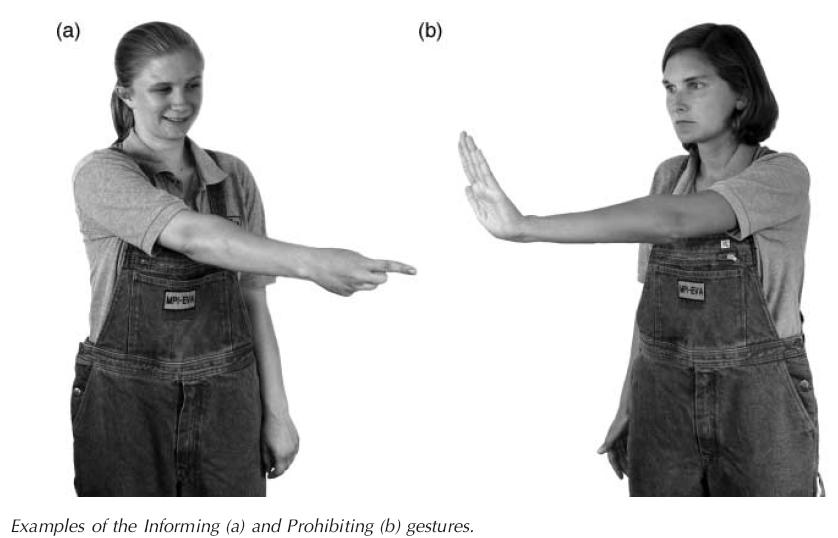
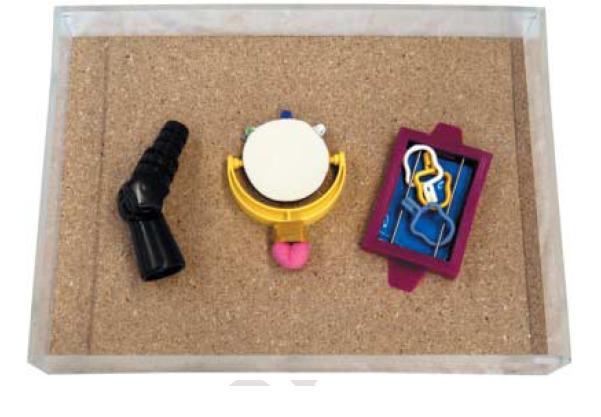
At 14 months of age for example, human children are able to successfully pass an object-choice task. In this task, children are presented with two upside-down buckets, one of which contains a toy, and the experimenter points toward the bucket where the toy is hidden. The child then turns to the right bucket and retrieves the toy. Although this task may appear simple, it is remarkable that chimpanzees fail it. In contrast to children, they fail to see the pointing gesture as a relevant cooperative signal within a shared attentional frame. Instead chimpanzees seem to think something along the lines of: “‘A bucket. So what? Now where’s the food?’ They do not understand that the pointing is intended to be ‘relevant’ to the searching as a shared activity (see Sperber & Wilson, 1986)” (Tomasello & Carpenter 2007: 122).


But this result is reversed in chimpanzees when instead of pointing cooperatively towards the bucket, the experimenter makes a prohibiting gesture by holding her arm out towards the correct container with her palm out, says something like “Don’t take this one” in a firm manner and then leaves the room. In this competitive context chimpanzees can successfully infer where the hidden reward. What is equally interesting is that 24 month old children do not retrieve the hidden toy possibly because they were better at cognitive control than 18 month old children and chimpanzees and were aware of the social and communicative conventions of the prohibiting action (Hermann & Tomasello 2006, see e.g. Miller et al. 2002, Tomasello 2008: 208ff. ).


Understanding Shared Experience

At the age they are able to solve a simple informative object-choice, infants also can keep track of who is familiar with some toy and who is not through shared experience.


In an experiment involving three toys and two experimenters, the first experimenter and the infant played together with two of the toys, then the first experimenter left the room. After that, the second exph the experimenter and the infant played with all three of the toys, but with two of them in a normal fashion and with one of them in a very excited manner. When the first experimenter then came back in ambiguously asked for “it” infants reliably gave them the toy they had an excited shared experience with. Control conditions clearly showed that the infants knew “which of these objects “we”—and not just me or you alone—had experienced in a special way in the immediate past: (Moll et al. 2008: 98). A linguistic experiment in which a mother played with three toys together with her child then left the room, and the child then played with a fourth novel toy together with an experimenter had similar results. When the mother came back and looked at the four toys and excitedly exclaimed “Oh, a modi, a modi!” the child successfully learned this as the word for the fourth novel object drawing on their experience of sharing common ground with the mother in respect to the first three toys, but not with the new toy (Akhtar et al. 1996).

Understanding Joint Commitments

In general, human children and infants seem to be much more interested in cooperation, sharing, and committing themselves to a shared goal and a shared experiential perspectives than other primates. In specific contexts chimpanzees exhibit joint, co-operative, coordinated hunting for small monkeys (Boesch & Boesch 1989), and human-raised enculturated chimpanzees successfully solve co-operative problem-solving tasks in which food could be retrieved only together with a non-competitive, familiar human adult both when it required parallel and complementary roles. When it comes to social games, however, such as one person rolling a ball down and another one catching it with a can (complementary), or making a wooden block jump on a trampoline (parallel), the chimpanzees showed no interested and played with single parts of the game set-up for themselves. 18 to 24 month-old human children on the other hand successfully took part in both the co-operative problem-solving tasks as well as the social games. What is more, in contrast to the chimpanzees the children actively tried to reengage the adult when he ceased doing his part of the co-operative activity in both problem-solving and social contexts. Children thus explicitly displayed skills of shared intentionality by being jointly committed to a shared goal with shared intentions. These skills can also be seen in the manifesting conversational and linguistic skills of children around that time (Tomasello 2003).

Pointing in Human Children and Chimpanzees


The shared intentionality infrastructure is also already present in communicative power of pantomiming and informative pointing just for the sake of sharing attention and sharing information which infants acquire around their first birthdays (Tomasello 2008: 111). These behaviours even include references to absent object or events such as something that is going on outside, happened in the past or will happen again in the future, a cup that is empty and should be filled, to something that is hidden or not present at the moment (Tomasello 2008: 116f.). Chimpanzee’s on the other hand, practically rarely point in natural contexts, and captive chimpanzees only do so when requesting something, using the human as a “social tool” (Tomasello 2006). A similar imperative behaviour has recently been observed in the wild: during grooming, chimpanzees sometimes point to a specific part of their body where they want to be scratched. (Pika & Mitani 2009). These "directed scratches" however, are also imperative in nature and not declarative.

In contrast, 12 to 18 month-olds also point co-operatively to inform others of the location of an object they are looking for. (Liszkowski et al. 2006 : 173). Generally humans infants and children have a natural tendency to be extremely cooperative in a variety of task and help others solve their problems
“even when the other is a stranger and they receive no benefit at all. However, our nearest primate relatives show some skills and motivations in this direction as well, and this suggests that the common ancestor to chimpanzees and humans already possessed some tendency to help before humans began down their unique path of hypercooperativeness.” (Warneken & Tomasello 2006: 1302 )

The evidence presented here strongly suggest that it indeed seems that social intelligence was a driving factor and the crucial foundation for what makes us unique.

But in addition, it seems that in the human lineage the “Machiavellian Intelligence Hypothesis,”, which sees social competition as the main causal factor for primate, including human brain evolution (Byrne & Whiten 1988, Humphrey 1976), does not apply across the board. Instead, it seems that the unique aspects of human cognition were driven, and are maybe even constituted by, collaboration, cooperation and the natural motivation to share experiences, intentions and perspectives, which then led to the advances in culture, technology, and higher-order cognition we see today (Moll & Tomasello 2007).

References:

Akhtar, N., Carpenter, M., & Tomasello, M. (1996). The role of discourse novelty in early word learning. Child Development, 67, 635-45.

Boesch, C. & Boesch, H. (1989): Hunting behavior of wild chimpanzees in the Taï-National Park. American Journal of Physical Anthropology 78(4), 547-573.

Byrne, R. & Whiten, A. (eds) (1988) Machiavellian intelligence: social expertise and the evolution of intellect in monkeys, apes and humans. Oxford, UK: Oxford University Press

Hare, Brian, and Michael Tomasello. (2005). Human-like social skills in dogs? Trends in Cognitive Science, 9, 439-444.

Herrmann, Esther. & Michael Tomasello, (2006). Apes' and children's understanding of cooperative and competitive motives in a communicative situation. Developmental Science, 9, 518-529

Humphrey, N. (1976) The social function of intellect. In Growing points in ethology (eds P. P. G. Bateson & R. A. Hinde), pp. 303–317. Cambridge, UK: Cambridge University Press.

Hurford, James M. (2007): The Origins of Meaning: Language in the Light of Evolution. Oxford: Oxford University Press.

Sperber, Dan and Deirdre Wilson (1995): Relevance: Communication and Cognition. Second Edition. Malden et al.: Blackwell.

Miller, Earl K., David J. Freedman and Jonathan D. Wallis (2002.) “The Prefrontal Cortex: Categories, Concepts and Cognition.” In: Phil. Trans. R. Soc. Lond. B 357: 1123–1136

Moll, Henrike and Michael Tomasello (2006): Level 1 Perspective-Taking at 24 Months of Age. British Journal of Developmental Psychology 24, 603–613

Liszkowski, U., Carpenter, M., Striano, T., & Tomasello, M. (2006). Twelve- and 18-month-olds point to provide information for others. Journal of Cognition and Development 7: 173-187.

Moll, Henrike, & Michael Tomasello. (2007) Co-operation and human cognition: The Vygotskian intelligence hypothesis. Philosophical Transactions of the Royal Society 362: 639-648.

Moll, Henrike., Richter, N., Carpenter, M., & Tomasello, M. (2008). Fourteen-month-olds know what ‘we’ have shared in a special way. Infancy, 13(1), 90-101

Tomasello, Michael (2003): Constructing A Language. A Usage-Based Approach. Cambridge, Massachusetts; London, England: Harvard University Press.

Tomasello, Michael (2008): The Origins of Human Communication. Cambridge, MA; London, England: MIT Press.

Tomasello, Michael and Malinda Carpenter (2007): “Shared Intentionality.” In: Developmental Science 10.1, 121-125.

Tomasello, Michael, Malinda Carpenter, Josep Call, Tanya Behne, and Henrike Moll (2005): Understanding and Sharing Intentions: The Origins of Cultural Cognition. In: Behavioral and Brain Sciences 28:5, 675–691.

Warneken, Felix. & Michael Tomasello, (2006). Altruistic helping in human infants and young chimpanzees. Science, 31, 1301 - 1303.

Thursday, July 1, 2010

WEIRD People and BIZARRE Chimps

The article "the weirdest people in the world?" (which I already mentioned last year, here), has finally been published in the current issue of the Behavioral and Brain Sciences (subscription needed, preprint can be found here).

In this article, Joseph Henrich, Steven J. Heine and Ara Norenzayan from the University of British Columbia in Vancouver, Canada, argue that
"Behavioral scientists routinely publish broad claims about human psychology and behavior in the world’s top journals based on samples drawn entirely from Western, Educated, Industrialized, Rich, and Democratic (WEIRD) societies."
Henrich et al. question whether these 'standard' subjects are really representative of homo sapiens as a species and instead hold that there is a substantial variability across cultures in domains such as
"visual perception, fairness, cooperation, spatial reasoning, categorization and inferential induction, moral reasoning, reasoning styles, self-concepts and related motivations, and the heritability of IQ."
The data they review indicate that both adults and children living in WEIRD societies
"are among the least representative populations one could find for generalizing about humans."
This position is sure to cause much debate, especially given that the article contains such tongue-in-cheek parts as mentioning that psychologists would surely bristle if the premier journal in social psychology, the "Journal of Personality and Social Psychology", would be renamed to more accurately reflect its main sample: "Journal of Personality and Social Psychology of American Undergraduate Psychology Students" (Henrich et al. 2010: 63)

This is why the target article is accompanied by 28 commentaries, which interestingly, are too a large extent quite positive. What is less surprising is that many of the commentaries use the acronym WEIRD for puns or come up with their own ones.

Here's a sample of the titles:
  • Weird people, yes, but also weird experiments (Baumard & Sperber 2010)
  • Weirdness is in the eye of the beholder (Bennis & Medin 2010)
  • It’s not WEIRD, it’s WRONG: When Researchers Overlook uNderlying Genotypes, they will not detect universal processes (Gaertner et al. 2010)
  • Wired but not WEIRD: The promise of the Internet in reaching more diverse samples (Gosling et al. 2010)
  • ODD (observation- and description-deprived) psychological research (Rai & Fiske 2010)
  • In a very interesting article, Leavens et al. (2010) claim that "BIZARRE chimpanzees do not represent “the chimpanzee.”" They caution that great apes from "Barren, Institutional, Zoo, And other Rare Rearing Environments" (BIZARRE) differ cognitively from great apes living in the wild. This makes it dangerous to make generalized statements about the cognitive capacities of great apes that are based mainly on experiments with BIZARRE apes. This is also the main thrust of the commentary by primatologist Christophe Boesch.
Leavens et al. (2010: 101) also have a very interesting graph comparing the pointing behaviors of wild chimpanzees, instituationalized chimpanzees and home-raised or language trained-chimpanzees, which varies markedly from one another. Rearing history and early development thus seem to be able to influence the pointing behaviour and interaction skills of chimpanzees quite heavily.

This is especially important given that researchers like Michael Tomasello and others argue that pointing declaratively to help, inform, and share motives and attitudes in a rich interactive setting characterized by joint attention, shared intentionality, common ground, as well as role- and perspective-taking is the key human cognitive specialization that makes us human and separates us from the other apes.

Most strikingly, in Leavens et al. 's (2010) analysis, chimpanzees also point declaratively, but this is contested by other researchers (e.g. Tomasello 2006, Tomasello 2008, see here). The main question here is how to understand "declarative pointing" and the cognitive capacities behind it, but this is a difficult topic. For Tomasello "declarative pointing" involves "a declarative motive" which
"assumes a partner with the psychological states of interest and attention, which one can then attempt to share."
And according to Tomasello, chimpanzees lack this understanding (Tomasello 2006).
Leavens et al. on the other hand define "declarative pointing" as
"Pointing to draw somebody’s attention to an object or event; includes responses to queries, such as pointing to an object when asked where that object is."
Tomasello would argue that the latter part does not belong into the category of declarative pointing as these kinds of gestures are not to be seen as as truly declarative or informative, as they are more
recognitory or classificatory, as the ape simply recognizes something and produces the associated sign in recognition“ (Tomasello 2008: 38)."
But as Leavens et al. (2010) also claim that chimpanzees point "to draw somebody’s attention to an object or event" and not only as a direct classificatory reaction, this stands in direct contrast to Tomasello's position. I'm very interested in how this debate will continue.

Sunday, June 13, 2010

Cognigrams

On Thursday I went to a talk by Miriam Noel Haidle, who talked about tool use in human and non-human animals. Haidle is part of the research project "The role of culture in early expansions of humans," which looks extremely interesting.
In her talk, Haidle introduced the idea of "cognigrams," which code the cognitive operations necessary for performing a complex task with multiple steps such as tool use. What is most interesting is that you can create cognigrams for the tool-using behaviour of humans, other tool using animals, and pre-humans, and then compare their complexity and use this to asses their cognitive potential.

Here's the abstract of her most recent paper elaborating on this idea:

"Tool use is the main database to track down behavioral developments in the archaeological record and thus human evolution. Working-memory capacity and modern cognitive potential, however, are no simple and obvious characters in tool behavior. Coded in cognigrams, which allow a direct comparison, animal and human tool use can be examined for specific aspects of the working-memory capacity. Detailed studies of tool behavior of wasps, sea otters, bottlenose dolphins, and chimpanzees are presented and compared with the manufacture and use of Oldowan tools and Lower Paleolithic spears. Although this shows a wide range of problem-solution distances, problem solving in animals seems to be restricted to problem complexes for which a solution can be found in spatial and temporal vicinity. In human evolution, the complexity of tool behavior increases regarding the number of active foci managed at a time in an action, the number and diversity of operational steps in a problem-solution complex, and the spatial and temporal frame in which solutions are sought. The results suggest a gradual development of the different aspects of a complex capacity instead of a late introduction of a closed phenomenon with only different facets."

Haidle, Miriam Noël (2010) Working‐Memory Capacity and the Evolution of Modern Cognitive Potential. Current Anthropology 51:s1, S149-S166

Here are two of these 'cognigrams', one of a chimpanzee tool set which is used to extract termites, (Haidle 2010: S154) and one of the cognitive complexity needed to create the kind of 400,000 year-old spear found in Schöningen, Germany. (Haidle 2010: S156)